
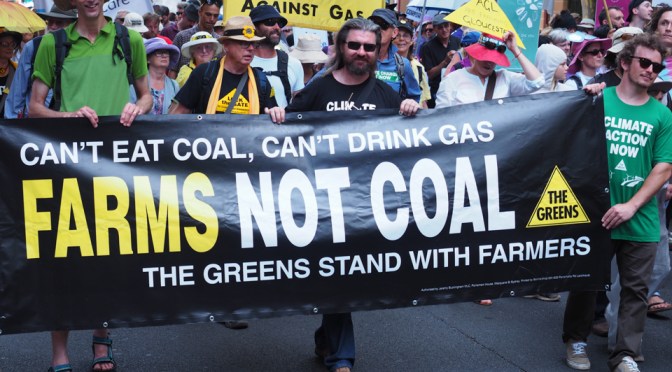
There is a disconnect between ever more alarming scientific projections of anthropogenic climate disruption and the contrasting conservatism of mainstream ‘business as usual’ political discourse. This wholly irrational future is the focus of our new book Climate Change, Capitalism and Corporations: Processes of Creative Self-Destruction (Cambridge University Press, 2015). It is a disjuncture that makes imagining economic, let alone social or environmental futures a somewhat bizarre enterprise. Nevertheless, let’s consider the conventional view of our future world as presented by mainstream business and political commentators. Continue reading Challenging ‘Fossil Fuels Forever’
All posts by christopherwrightau

Corporations and climate change
Global businesses, many of them now larger and more powerful than nation states, exhibit enormous sway on humanity’s response to the climate crisis. Indeed, in the lead-up to the Paris climate talks later this month there is growing media focus on so-called business “leadership” on climate change. For instance, just last month Royal Dutch Shell, General Electric, BHP Billiton and management consultancy McKinsey & Co. announced the establishment of a committee to advise governments on how to combat global warming while strengthening economic growth. This follows other announcements such as Unilever’s chief executive officer, Paul Polman, emphasising the need for private sector mobilization to close the shortfall in emission commitments made by governments, as well as Virgin’s CEO Richard Branson who has argued that “our only hope to stop climate change is for industry to make money from it.” Continue reading Corporations and climate change

Explaining Creative Self-Destruction and the Climate Crisis
Recently, Daniel Nyberg and I did an interview with Catherine Zengerer on radio station 2SER’s “On the Money” show about our new book Climate Change, Capitalism and Corporations: Processes of Creative Self-Destruction.
The interview is a good outline of many of the core arguments in our book. As the summary accompanying the interview outlines:
With climate change an impending reality it seems the world has a problem with overconsumption. But according to two business professors we are failing to address the very cause of climate change – capitalism.
Neoliberal economists argue that climate change – a market problem, is addressed by a market solution. But according to Professor Christopher Wright and Professor Daniel Nyberg more consumption is not the solution in a society where the environmental model is often traded off for a business model. Can we have our cake and eat it too?
You can hear the full interview (about 10 minutes) here.
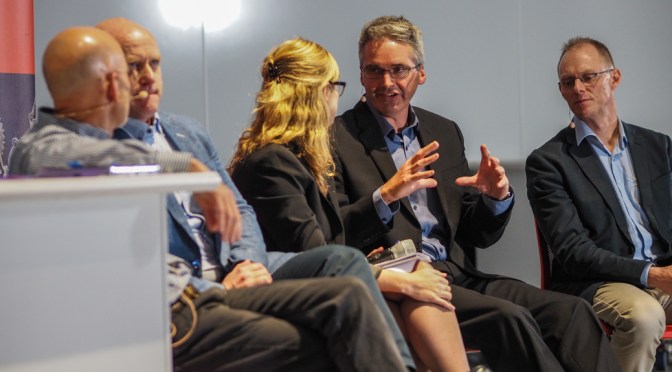
Panel Discussion on Climate Change, Capitalism and Corporations
Bill McKibben has argued that “it’s possible that there’s no greater example of corporate irresponsibility than climate change – I mean, these companies melted the Arctic, and then rushed to drill in the open water. ”
With the recent revelations that oil giant Exxon has known about the likely catastrophic impacts of continued fossil fuel use as far back as 1981, it seems McKibben is spot on in his assessment. After all what could be more immoral and irresponsible than knowingly destroying the habitable climate of the only home we have – planet Earth! Continue reading Panel Discussion on Climate Change, Capitalism and Corporations
Having it All and Avoiding Climate Disaster? Maybe Not
The University of Sydney Business School recently featured the new book that Daniel Nyberg and I have authored Climate Change, Capitalism and Corporations: Processes of Creative Self-destruction as part of their Research Highlights series. The book is presented as “a sobering yet hopeful account of how corporate myths have slowed our response to human-caused climate change, and what we can do about it.” You can view the PDF of the story here and the video is below.

Robert Manne Launches Climate Change, Capitalism and Corporations
On Tuesday last week at RMIT in Melbourne, leading public intellectual and La Trobe University Emeritus Professor, Robert Manne launched our new book Climate Change, Capitalism and Corporations. We are indebted to Robert for agreeing to launch our book, as he has been one of the most articulate and considered commentators confronting the issue of climate change and its poisoned political legacy.
Robert’s regular analyses of climate politics had a deep impact on my own thinking about the climate crisis. In particular, I remember having started the research that would result in our book back in 2010, reading one of Robert’s insightful analyses of the political impasse over climate change in The Monthly magazine during a trip to Europe. As the train hurtled through the countryside between Frankfurt and Amsterdam, I looked up from the article to see row upon row of wind turbines turning in the late afternoon sunlight; the contrast with fossil fuel addicted Australia couldn’t have been more obvious. Continue reading Robert Manne Launches Climate Change, Capitalism and Corporations

Creative Self-Destruction and the Climate
Leading public intellectual and Professor of Public Ethics at Charles Sturt University, Clive Hamilton very generously wrote the excellent Foreword to our new book Climate Change, Capitalism and Corporations: processes of Creative Destruction. Below is an adapted version of that Foreword recently published in The Conversation.
——-
In his 2006 landmark report on how we should respond to the climate crisis, Nicholas Stern characterised global warming as an ‘externality’, a damage to others due to market activity whose cost is not met by those who cause it. Continue reading Creative Self-Destruction and the Climate

New book on Climate Change, Capitalism and Corporations
Our new book Climate Change, Capitalism, and Corporations: Processes of Creative Self-Destruction has just been published. Based on research that Daniel Nyberg and I have been conducting over the last 6 years, the book explores the complex relationship that the corporate world has with climate change and the central role corporations play in shaping political and social responses to the climate crisis.
In the book, we explore the different processes through which corporations engage with climate change. The principal message is that despite the need for dramatic economic and political change, corporate capitalism continues to rely on the maintenance of ‘business as usual’. As outlined in this short summary in The Conversation this involves the myth that ‘green’ capitalism is a viable response to the climate crisis. This response enables the incorporation of critique and the maintenance of corporate capitalism despite the dire environmental consequences. Continue reading New book on Climate Change, Capitalism and Corporations
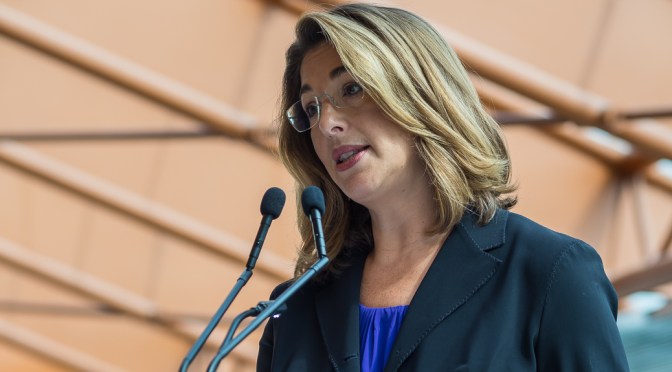
Naomi Klein talks about Capitalism Vs. the Climate
In her latest book, This Changes Everything (2014), Canadian writer and activist Naomi Klein argues that unrestrained capitalism is at the root of the climate crisis and that the global response to climate change has, thus far, been shaped by wealth and power.
Earlier in the month I had the chance to speak with Naomi Klein on the eve of her appearance at the Sydney Festival of Dangerous Ideas. The transcript of our discussion is set out below and you can listen to the podcast of our discussion here. Continue reading Naomi Klein talks about Capitalism Vs. the Climate

Using social media to turbo-charge your research!
Recently I helped organise a social media training event at my university. The idea was to expose academics to different social media platforms, highlight the advantages of social media for academic work, and also teach them the basics of blogging and Twitter. Afterwards I was interviewed about how and why I use social media in my climate change research. Having been seduced by the attractions of social media some years ago, I’m now very much a social media advocate. Anyway, here’s my response to some of the interview questions re my own social media use:
Continue reading Using social media to turbo-charge your research!

Fossil Fuel Divestment as Effective Climate Change Action
Earlier in the year I was asked to talk at a Politics in the Pub event on the subject of ‘How Effective Is the Fossil Fuel Divestment Movement in Speeding up Action on Climate Change?’. I shared the stage with Blair Palese, Australian CEO of 350.org, and it was an opportunity to talk about how divestment might contribute to a more effective political response to the climate crisis. Below is an abridged version of my talk and you can view a video of the presentation at the bottom of this post.
Continue reading Fossil Fuel Divestment as Effective Climate Change Action
Representing Climate Change?
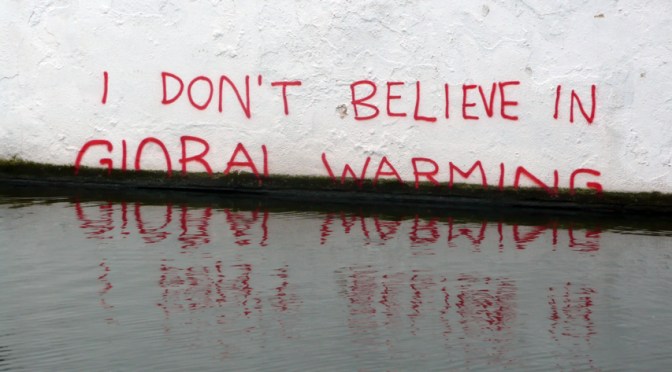
Writing about climate change often requires some type of visual reference particularly given the way our eyes are drawn to the visual in social media settings and more generally in public debate. But how do you visually represent the human-induced climate disruption we are now living through? As Naomi Klein has demonstrated so powerfully, climate change ‘changes everything’! And yet despite its profound impacts, it is a phenomenon that is also diffuse across space and time.
This was an issue that I confronted late last year when Daniel Nyberg and I completed the manuscript for our forthcoming book Climate Change, Capitalism and Corporations: Processes of Creative Self-Destruction. With the draft manuscript sent off to the publishers, we then agonised over the book cover design. An early offer from the publishers presented a somewhat anodyne image of suited business people on an escalator (the sort of thing one sees everyday on management textbook covers) – probably relevant in that context but nothing really about climate change. Continue reading Representing Climate Change?

Climate Change, Capitalism and Corporations out in September
Our new book Climate Change, Capitalism, and Corporations: Processes of Creative Self-Destruction will be released in both paperback and hardback in late September. You can view the website for the book here.
Based on research that Daniel Nyberg and I have been conducting over the last 6 years, the book explores the complex relationship that the corporate world has with climate change and examines the central role of corporations in shaping political and social responses to the climate crisis. Continue reading Climate Change, Capitalism and Corporations out in September

Road to Paris and Science Based Targets Initiatives
On May 1, the Balanced Enterprise Research Network (BERN) at the University of Sydney Business School hosted an event in collaboration with the UN Global Compact, the Carbon Disclosure Project (CDP) and WWF Australia on the Road to Paris and Science Based Targets Initiatives.
This forum launched the initiative ‘Science Based Targets‘ – which aims to encourage businesses to set new, ambitious greenhouse gas emission reduction targets in the run up to the COP21 talks in Paris later this year. Formed as a response to the urgent call by the Intergovernmental Panel on Climate Change (IPCC) to decarbonise the economy, the initiative adopts a scientific approach to climate action in line with the latest IPCC report, and highlights the central role that business must play in responding to the climate threat by reducing GHG emissions in line with the best climate science. Continue reading Road to Paris and Science Based Targets Initiatives

Climate change as a moral issue for business?
Last Monday Greens Leader Christine Milne delivered a landmark speech at the University of Sydney on the next steps for global warming policy around the world and Australia’s role as we approach the 21st Conference of the Parties (COP 21) in Paris this year.
I participated in the event as one of the respondents to Senator Milne’s address and was asked to comment on ‘what role business should play in effective climate change response?’ My response is set out below, but one theme that emerged in the discussion is whether business has an ethical responsibility in its response to climate change? I argue that it does, and this excellent article by David Roberts today highlights the broader way in which climate change is being viewed as a moral imperative and why this frightens those opposed to action on climate change. This an issue business seems unprepared to deal with, but as the climate crisis worsens and its moral implications become more apparent, it is one businesses need to increasingly engage with. Continue reading Climate change as a moral issue for business?
 Climate, People & Organizations