Tag Archives: Climate change

What Does Direct Action on Climate Change Really Look Like?

As the disconnect between political obfuscation and climate science continues, how might individuals respond to climate change?

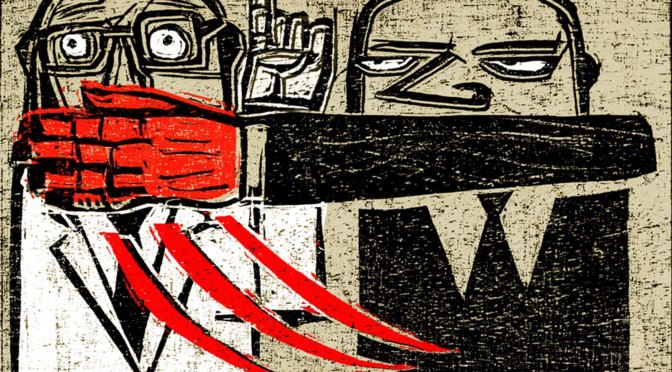
One theme that has emerged in my research is how people are beginning to reconsider their jobs and careers based upon a personal realisation of the urgency of the climate crisis. For instance, last week I received an email from a scientist in a US environmental agency, who related the increasingly tough choices she was having to make in her job. She was involved in overseeing fossil fuel developments in coal and gas, something she found increasingly problematic. After much thought she decided to no longer work for organisations facilitating the extraction and use of fossil fuels. As she explained:

…many have pointed out that my position allowed me to protect the environment. But that never sat well with me, especially as it relates to fossil fuels with their broad and wide externalities. After much introspection, and a couple of tears, I realized that an opinion like that is a flat view and it ignores the fact I have enabled interests that are contrary to human existence. It’s the enabling that drives us nuts. To this end, I now flatly refuse any work that deals with fossil fuels interests. It makes life much simpler for me and I suspect it will for others.

Continue reading What Does Direct Action on Climate Change Really Look Like?

Climate change: In the end we’re all losers

iStock_000015530665Small

Who will be the business ‘winners and losers’ from the repeal of the ‘carbon tax’ under Australia’s new conservative Federal Government? This was a question I was asked in a recent interview for ABC TV’s The Business. You can see the resulting report here.

The ‘winners’ in this story should come as no surprise – mining and energy companies -especially those involved in fossil fuel extraction and consumption, which would no longer be required to pay for their greenhouse gas emissions. By contrast, the ‘losers’ were seen as those groups promoting renewable energy and seeking to wean us off our fossil fuel addiction. However, what struck me in participating in this interview are the incredibly short-term time horizons business people frame their decision-making within. ‘Winners’ are defined in terms of the immediate financial savings that result from changed legislation, rather than the strategic implications of continued high carbon emissions in a changing world.

Continue reading Climate change: In the end we’re all losers

IPCC 2013 and Creative Self Destruction Redux

Image: Christopher Wright

Well the IPCC‘s latest scientific report has come out confirming what many of us have suspected – that anthropogenic climate change is on track with previous worst-case scenarios and the future prognosis is bleak. Given the IPCC is by its nature a conservative organisation, it seems likely that as before, the current report may well underestimate some climate impacts. Be that as it may, this is startling and confronting  to read given the import of its conclusions.

Continue reading IPCC 2013 and Creative Self Destruction Redux

Imagining Our Climate Changed Future

3972775207_7da7d4af1d_o

Climate change has rapidly emerged as a major threat to our future. Indeed the increasingly dire projections of increasing global temperatures and escalating extreme weather events highlight the existential challenge that climate change presents for humanity.

In popular and political discourse, climate change is depicted as an environmental or ‘natural’ problem that requires ‘rational’ responses based on scientific evidence. However, there is also a need to view climate change as a social and politically embedded phenomenon, linked to patterns of production and consumption and the ideological assumptions that underpin the economic system and our collective sensemaking processes.

Continue reading Imagining Our Climate Changed Future

What Climate Change Looks Like

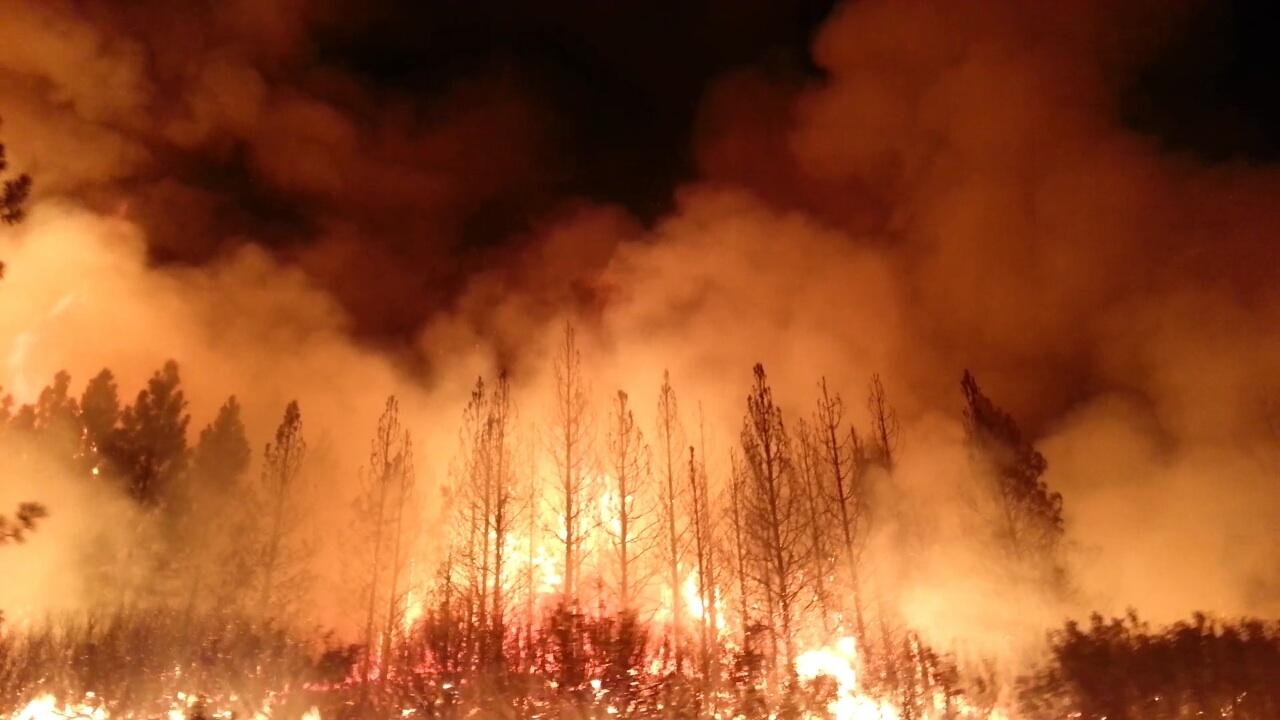
One of the faces of a warming planet - The Rim Fire, California, August, 2013 (Image: U.S. Forest Service)
One of the faces of a warming planet – The Rim Fire, California, August, 2013 (Image: U.S. Forest Service)

The last few weeks has been full of news of extreme weather events from across the world. One of the best sources for keeping up to speed on the Anthropocene’s new climate ‘normals’ is Faun Kime’s great blog site, which includes weekly pictorial updates on weather disasters unfolding around the world.

Last week the extreme weather news hit our family in a way that really resonated. No, not one of our increasingly regular Australian extreme weather events, but something happening on the other side of the world, in a place we had visited a few months ago and fallen in love with: Yosemite National Park in California, USA.

Continue reading What Climate Change Looks Like

The Missing Factor in Climate Change Adaptation? Human Psychology

How well do humans respond in a crisis and how we will react in the ‘new normal’ of on-going climate crisis? This is a question I’ve been pondering more and more in thinking about the human and organizational dimensions of climate change.

For instance, within the mainstream discourse of climate change policy the argument is often made that we need to move beyond climate change ‘mitigation’ and focus increasingly on ‘adaptation’. While adaptation is a critical part of responding to the impacts of climate change, the implication is that adaptation is now the ‘main game’ and will involve relatively manageable infrastructure and planning changes. The problem here is that the scale of climate change on ‘business as usual’ (BAU) projections will likely exceed manageable parameters. Physically, there are clear issues over how humanity can adapt to 4-6 degrees Celsius warming in terms of a habitable climate, extreme weather events and the demise of food supplies. Indeed, some researchers have now started to focus on ‘transformative’ adaptation. As a recent commentator noted, ‘The words that need to be in our conversations are transformation, rationing and shared sacrifice’. However, this becomes even more complex once we consider humanity’s psychological ‘adaptive capacity’ in a situation of societal breakdown.

Continue reading The Missing Factor in Climate Change Adaptation? Human Psychology

‘We’re F#cked!’ Conceptualising Catastrophe

Galveston Aftermath (Image: Cody Austin)

Climate change is often characterised as a ‘crisis’ but is it more accurately understood as a ‘catastrophe’? This is a question I’ve been pondering during the last few days at the 8th International Conference in Critical Management Studies at the University of Manchester. Along with colleagues Christian De Cock, Daniel Nyberg and Sheena Vachhani, I’ve been involved in organising a conference stream which pondered the meanings of catastrophe under the somewhat mischievous title ‘We’re Fucked! Conceptualising Catastrophe’.

Continue reading ‘We’re F#cked!’ Conceptualising Catastrophe

Bill McKibben – Do the Maths

Bill McKibben - David vs Goliath (Image: Christopher Wright)
Bill McKibben – David vs Goliath (Image: Christopher Wright)

Last night I attended Bill McKibben’s first public Australian lecture at the University of Sydney. It was sell-out event and the Seymour Theatre was full as young and old crammed in to hear what one newspaper has termed the “rock star of the global warming movement”. Waiting for the doors to open it did have that feeling of a big event – a performance by someone who has been willing to call-out the elephant in the room – our convenient but ultimately suicidal race to change the physics of the Earth in the name of “business as usual”. People were hungry to see and hear the unassuming American who has become the most prominent public face of the fight against global warming.

Continue reading Bill McKibben – Do the Maths

Symposium on Business Responses to Climate Change

In March this year, the Sydney Network on Climate Change and Society in association with the University of Sydney Business School organized a one-day symposium exploring how businesses as social actors have responded to the emerging climate crisis. The symposium featured a keynote address by Professor Andy Hoffman, the Holcim (US) Professor of Sustainable Enterprise at the University of Michigan, followed by contributions from other influential academic writers on climate change, and insights from a range of business practitioners at the leading edge of corporate environmental sustainability.

Continue reading Symposium on Business Responses to Climate Change

Interview: Researching Business Responses to Climate Change

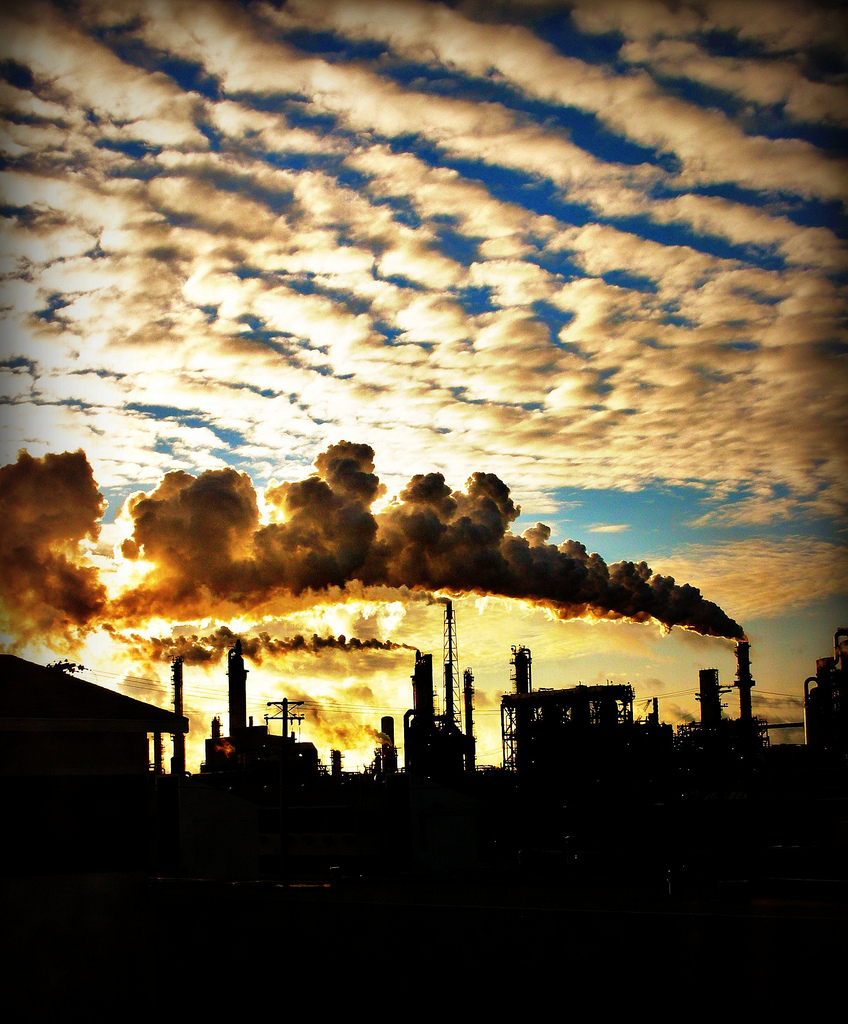
Oil Sands (Image: Pete Williamson http://www.flickr.com/photos/4blueeyes/4981183847/sizes/l/in/photostream/)

Recently I did an interview with radio station 3CR’s Beyond Zero program about my research into business responses to climate change. You can hear the interview and my thoughts on the problems of engaging business on this critical issue at the link below:

This interview coincided with the visit by Professor Andy Hoffman to the University of Sydney, where he spoke about developments in US industry on climate change action. You can hear the full interview with Andy here.

Incorporating Citizens: Corporate Political Engagement with Climate Change

Orson Welles Citizen Kane (Image: Wikimedia Commons)

Business corporations are key players in the on-going political debate surrounding climate change. In producing the goods and services of the global consumer economy, corporations are major producers of greenhouse gas emissions. However, corporations can also play a leading role in the mitigation of those emissions through increased efficiencies and the development of new technologies. As a result, the business response to climate change can often appear conflictual. ‘Corporate greening’ and innovation contrast with examples of business obfuscation and the organised funding of climate change denial (e.g. as this recent documentary outlines).

Continue reading Incorporating Citizens: Corporate Political Engagement with Climate Change

Prof Andy Hoffman on Climate Change and Green Business

Last month we were lucky to have Professor Andy Hoffman from the University of Michigan visit the University of Sydney Business School and present a number of talks on climate change and business responses. Andy is one of the world’s leading experts on business and climate change and has published extensively on this topic.

Above is a short interview on ABC’s Business Today program hosted by Whitney Fitzsimmons, where Andy discusses some of the business implications of climate change and related regulatory and market changes.

Measuring ‘Sustainability’

‘Sustainability’ has become a pervasive part of social and business discourse. However getting down to specifics on sustainability is a much debated issue.

This is of particular relevance for climate change. In particular, how can we speak of, or imagine ‘sustainability’, given the underlying conflict that emerges between the pursuit of ‘economic progress’ defined in terms of the production and consumption of goods and services, and the ever escalating production of greenhouse gas emissions.

Continue reading Measuring ‘Sustainability’

Climate Change as Culture War

Image: http://www.flickr.com/photos/mugfaker/5847464425/in/photostream/

The social and political debate over climate change continues unabated, despite an ever worsening procession of extreme weather events and increasingly dire scientific climate projections (on track for a 4 degree warmer world).

While there is a significant over-estimation of the extent of climate change denial within society, those who reject the phenomenon of anthropogenic climate change appear to have become even more strident, despite the overwhelming weight of climate science.

Continue reading Climate Change as Culture War

The Power of the Visual

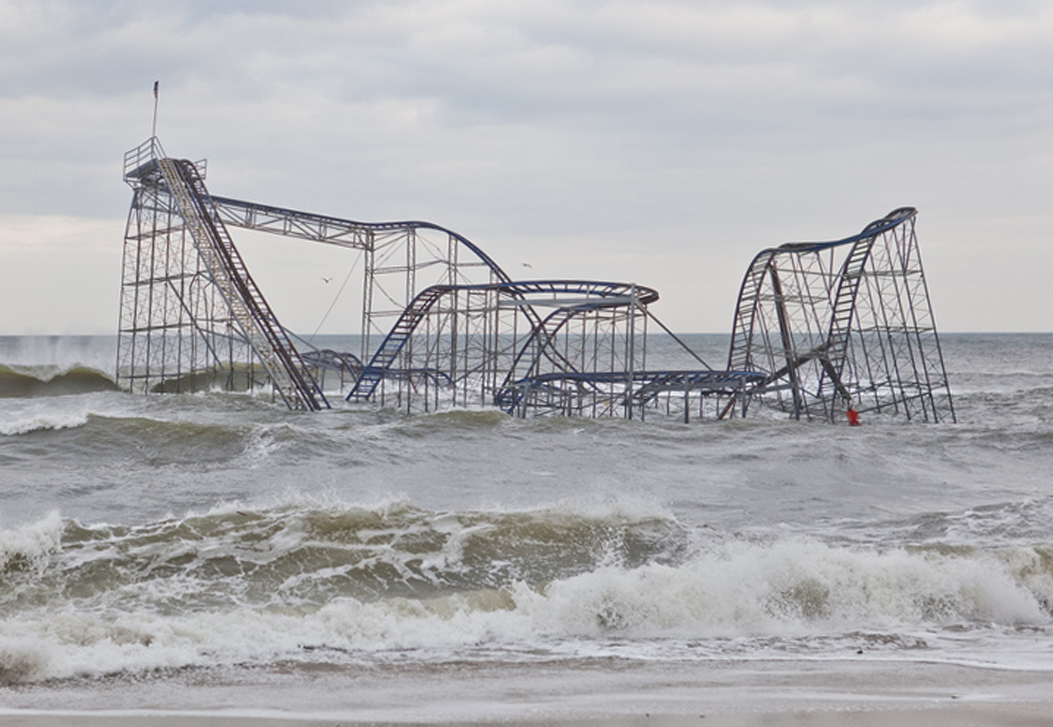
November 19th, 2012: Along the beach in the Rockaways, NY (Image: Jenna Pope)

The complexity and pervasiveness of climate change sometimes make this a difficult subject to communicate. We are after all talking about the basic physics, chemistry and biology of our ecosystem and the way in which human activities are changing these in profound and fundamental ways; what some have termed a new geological epoch – the Anthropocene.

And yet, the physical and social implications of climate change are becoming daily more evident.  One of the most powerful ways in which this can be conveyed is through visual imagery. For instance a growing procession of extreme weather events, such as Hurricane Sandy and its impact upon New York City have provided a multitude of powerful images of the micro realities of extreme weather and how even the centre of global capitalism is no match for a ‘climate on steroids‘.

Continue reading The Power of the Visual