All posts by christopherwrightau

Professor University of Sydney. Researching climate change, business and organisational change.

Off-topic: “Corporate responses to #climate”, interview with #academics

manchesterclimatemonthly's avatarmanchester climate monthly

Two academics, one based in the UK and the other in Australia, have just had a rather excellent article called “Creative self-destruction: corporate responses to climate change as political myths” published in the journal Environmental Politics.  Here’s an interview with the Ozzie, Christopher Wright.

1) Who are you and how did you come to be co-writing the articles that you have?

I am a Professor of Organisational Studies at The University of Sydney Business School and have been researching the role of management and corporations in capitalism for over 25 years. I’ve been personally interested in climate change since the early 2000s and about ten years ago I ran into a new group of ‘sustainability managers’ in some of the large businesses I was studying. I was fascinated by these individuals’ often personal concern with environmental and social issues and the apparent tensions with organisational objectives (maximising shareholder value…

View original post 1,880 more words

Ecopragmatism and the ‘Good Anthropocene’

I stumbled on this debate on Twitter yesterday in a response by Clive Hamilton to a TED talk by Andy Revkin on ‘Charting Paths to a “Good” Anthropocene’. Andy’s talk stresses the potential for a more optimistic future by pointing to a number of cognitive and emotional strategies with which we can better adapt to the worsening climate crisis. Clive’s critique argues that this type of thinking is part of an emerging form of ‘ecopragmatism’ which promotes a hopelessly unrealistic vision of human capacity to adapt to the climate change pathways we will experience this century (this argument is further developed in an article that has just come out in Scientific American). Andy has responded, arguing that he doesn’t believe he and Clive are so far apart in terms of recognizing the very real dangers of the climate crisis and that he hopes those who have ‘bridled’ at his vision for a ‘good Anthropocene aren’t hoping for a bad one’!

Continue reading Ecopragmatism and the ‘Good Anthropocene’

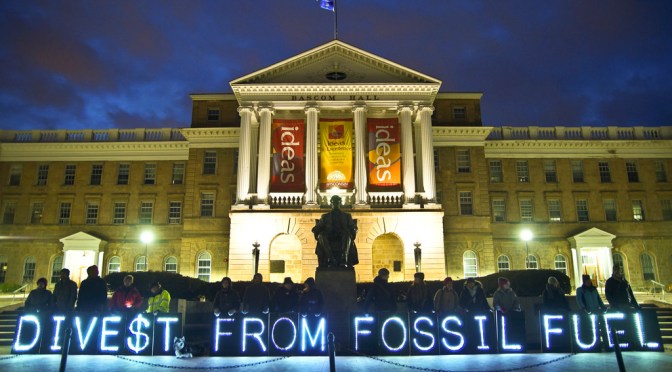
Fossil Fuel Divestment: Climate Proofing Your Finances

With the growing success of the divestment movement in the United States and concern over ‘stranded assets’ as the climate crisis exacerbates, the Balanced Enterprise Research Network (BERN) at the University of Sydney Business School, in association with 350.orgMarket Forces and the Australia Institute, hosted a panel discussion on Thursday 29th May exploring the potential for fossil free investment. You can view a video of the event below.

Continue reading Fossil Fuel Divestment: Climate Proofing Your Finances

Trying to cash in on climate change won’t fool nature

We find ourselves in an era of what we might call creative self-destruction. We’re destroying ourselves – it’s as simple as that.

Economic growth and exploiting nature’s resources have long gone hand-in-hand, but as repeated warnings from scientists and reports such as the latest from the IPCC tell us, they now constitute the most ill-fated of bedfellows. Climate change, the greatest threat of our time, is perhaps the definitive manifestation of the well-worn links between economic progress and devastation.

Continue reading Trying to cash in on climate change won’t fool nature

Why Business ‘Leading’ on Climate Change is a Problem

So it has come to this. Despite a mountain of scientific evidence emphasising the catastrophic implications of human-induced climate change, governments seem unable to take any significant steps to break humanity’s addiction to fossil fuels. As Chris Hayes recently noted, having been confronted with the fact of our addiction we now are in the full throws of denial; ‘it’s not that bad’, ‘we need fossil fuels to prosper and grow’, ‘one more fossil fuel development won’t matter’, ‘how bad can it be?’ etc.  For governments and politicians long inculcated in the interests of the market and short-term corporate profit, the maintenance of a habitable atmosphere now appears something we are willing to forgo.

Continue reading Why Business ‘Leading’ on Climate Change is a Problem

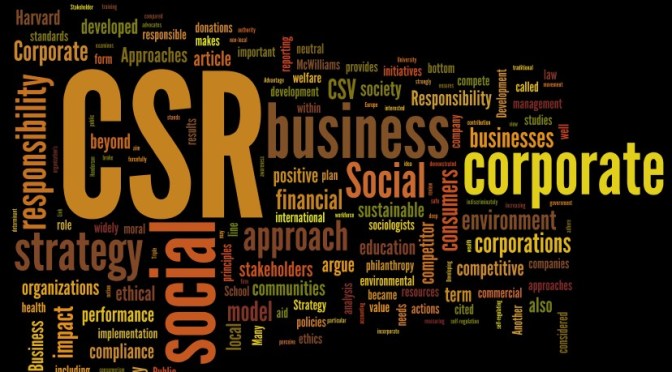
Corporate Social Responsibility at the Crossroads

Guest post by Professor Dirk Matten

Nearly a decade ago, The Economist ran a special report on corporate social responsibility (CSR) which opened with the line: ‘CSR has won the battle of ideas’. What was true back then in 2005 is certainly a truism today. Hardly any major company does not tell you on their website, their reports or other communications what they are doing with regard to CSR (or whichever other label they choose for this).

Continue reading Corporate Social Responsibility at the Crossroads

The Politics of Climate Change Research Funding

Readers may remember that back in November, Queensland Liberal Senator Ian Macdonald caused some consternation when he characterised the ‘appalling’ situation of too much research funding being devoted to climate change! Explicit in the Senator’s statement was an argument that competitive grants had been subject to political influence under the former Federal Labor Government. As Senator Macdonald stated:

I also know that a number of scientists—and I have had personal interaction with some of them—who wanted to do research that did not follow the then government’s view of climate change would never ever get a grant from the Australian Research Council. That seemed to me, if that were the case—and I accept what was told to me—that the Research Council was actually following a dictum from the then government about climate change and climate change research.

Continue reading The Politics of Climate Change Research Funding

Forget ‘Business As Usual’

Reposted from the Erasmus Research Institute of Management

As the evidence of climate change mounts, Professor Gail Whiteman says managers must reimagine business. (Text Bennett Voyles)

For some time now, most businesses have put environmental sustainability on an ever-growing list of laudable corporate social responsibility goals. Some have even made serious efforts to achieve that aim.

Continue reading Forget ‘Business As Usual’

We are The Borg – So is Resistance to Climate Catastrophe Futile?

Recently I came across this excellent short video of our likely climate future based on recent IPCC reviews. Produced by Globaia, this visualisation is quite effective in trying to comprehend the impact humanity is having upon the Earth’s climate and ecosystem at a global scale; popularised in the concept of the ‘Anthropocene‘.

In reviewing the current social debate around climate change, I’m often reminded of the similarities between our current climate crisis and popular culture references in books and film. There is a rich vein of dystopian literature and related movies that tap into this zeitgeist of environmental disaster, overpopulation and apocalypse (for a reflection on this see Kathryn Yusoff and Jennifer Gabrys’ article ‘Climate Change and the Imagination’).

Continue reading We are The Borg – So is Resistance to Climate Catastrophe Futile?

Book Launch: Climate-Challenged Society & Globalization and the Environment

ScreenHunter_51 Nov. 22 19.19

Australia has long been known for its environmental politics – movements, policy, and academic analysis. On Wednesday 11th December, four of the most well-known Australia-based academics of environmental politics from the University of Sydney, University of Melbourne, and Australian National University will convene to discuss and celebrate two recent books aimed at analysing and stimulating debate on the current and future state of environmental and climate politics.

Continue reading Book Launch: Climate-Challenged Society & Globalization and the Environment

Researching Climate Change in an Era of Political Denial

99129170_7d542023a6_o

That the social debate around climate change is a ‘culture war’ should come as no surprise to anyone observing current political debate in Australia, the US, UK and Canada. In contrast to much of the rest of the world where climate science is rarely debated, in the Anglo-Saxon world the culture war around climate change rages on with increasing vehemence.

Continue reading Researching Climate Change in an Era of Political Denial

Making Our Planetary Suicide a ‘Rational’ Project

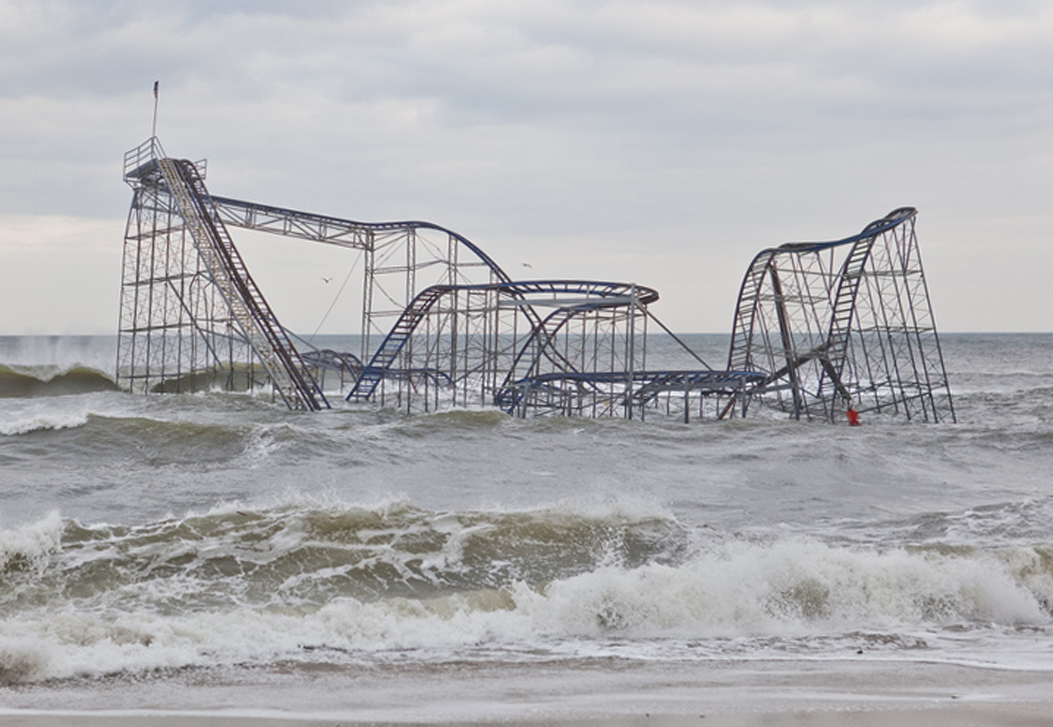
Superstorm Sandy damage in Seaside Heights New Jersey (Image: Anthony Quintano)

Over the last year or so, Daniel Nyberg and I have been writing a paper exploring the role of political myths in underpinning corporate responses to climate change. The paper has now been published online in the journal Environmental Politics, and you can download a PDF of the article here. I’ve also presented the paper in a Sydney Environment Institute seminar (audio file below).

Continue reading Making Our Planetary Suicide a ‘Rational’ Project

What Does Direct Action on Climate Change Really Look Like?

As the disconnect between political obfuscation and climate science continues, how might individuals respond to climate change?

One theme that has emerged in my research is how people are beginning to reconsider their jobs and careers based upon a personal realisation of the urgency of the climate crisis. For instance, last week I received an email from a scientist in a US environmental agency, who related the increasingly tough choices she was having to make in her job. She was involved in overseeing fossil fuel developments in coal and gas, something she found increasingly problematic. After much thought she decided to no longer work for organisations facilitating the extraction and use of fossil fuels. As she explained:

…many have pointed out that my position allowed me to protect the environment. But that never sat well with me, especially as it relates to fossil fuels with their broad and wide externalities. After much introspection, and a couple of tears, I realized that an opinion like that is a flat view and it ignores the fact I have enabled interests that are contrary to human existence. It’s the enabling that drives us nuts. To this end, I now flatly refuse any work that deals with fossil fuels interests. It makes life much simpler for me and I suspect it will for others.

Continue reading What Does Direct Action on Climate Change Really Look Like?

Climate change: In the end we’re all losers

iStock_000015530665Small

Who will be the business ‘winners and losers’ from the repeal of the ‘carbon tax’ under Australia’s new conservative Federal Government? This was a question I was asked in a recent interview for ABC TV’s The Business. You can see the resulting report here.

The ‘winners’ in this story should come as no surprise – mining and energy companies -especially those involved in fossil fuel extraction and consumption, which would no longer be required to pay for their greenhouse gas emissions. By contrast, the ‘losers’ were seen as those groups promoting renewable energy and seeking to wean us off our fossil fuel addiction. However, what struck me in participating in this interview are the incredibly short-term time horizons business people frame their decision-making within. ‘Winners’ are defined in terms of the immediate financial savings that result from changed legislation, rather than the strategic implications of continued high carbon emissions in a changing world.

Continue reading Climate change: In the end we’re all losers