Category Archives: politics

Climate change as a moral issue for business?

Last Monday Greens Leader Christine Milne delivered a landmark speech at the University of Sydney on the next steps for global warming policy around the world and Australia’s role as we approach the 21st Conference of the Parties (COP 21) in Paris this year.

I participated in the event as one of the respondents to Senator Milne’s address and was asked to comment on ‘what role business should play in effective climate change response?’ My response is set out below, but one theme that emerged in the discussion is whether business has an ethical responsibility in its response to climate change? I argue that it does, and this excellent article by David Roberts today highlights the broader way in which climate change is being viewed as a moral imperative and why this frightens those opposed to action on climate change. This an issue business seems unprepared to deal with, but as the climate crisis worsens and its moral implications become more apparent, it is one businesses need to increasingly engage with. Continue reading Climate change as a moral issue for business?
Fossil Fuels as Stranded Assets?

Recently, the Balanced Enterprise Research Network (BERN) at the University of Sydney hosted a visit by Ben Caldecott, Director of the Stranded Assets programme at the Smith School of Enterprise and Environment at the University of Oxford. During his visit, Ben presented a number of very well-attended talks on the issue of fossil fuels as stranded assets and the implications for Australian investments in coal mining. Continue reading Fossil Fuels as Stranded Assets?

Book Review: This Changes Everything: Capitalism Vs. The Climate

It’s hard to know how to approach the phenomenon that is Naomi Klein’s This Changes Everything: Capitalism Vs. The Climate. In case you’ve been living in a remote cave for the last six months, this is the book that came out last September to rave reviews in the world’s major newspapers, which has been serialised on the front page of The Guardian over several days, and which has both left-wing commentators and even some conservatives singing its praises. There is also a documentary film coming out to accompany the book and sell out presentations by the author around the world linked to climate activist events. So this book comes with huge media fanfare and expectation. Continue reading Book Review: This Changes Everything: Capitalism Vs. The Climate

The Future of Fossil Fuels in a Climate-Challenged World

Open cut coal mine - Hunter Valley

The politics of climate change is becoming ever more complex. Just last week in Australia we have witnessed the spectacle of our major political parties voting against moves to prohibit coal and CSG mining on agricultural land; one of the country’s most influential conservative radio commentators supporting a Greens’ politician in her efforts to limit fossil-fuel developments on farming land,  and the conservative NSW government approving a massive expansion of coal mining in the Hunter Valley (which will include the relocation of an entire village!). Continue reading The Future of Fossil Fuels in a Climate-Challenged World

The corporate creation of an engaging ‘green’ spectacle

The following is an extract from our forthcoming book Climate Change, Capitalism and Corporations: Processes of Creative Self-destruction (Cambridge University Press) - out in bookshops later this year.

Corporate marketing and branding around sustainability and ‘green’ themes has undergone dynamic growth over the past decade as social concern over the environment and climate change has spiralled. Many major consumer brands – including Walmart, Ben & Jerry’s, GE, Toyota, Patagonia, Frito-Lay, Timberland, Tesco and even Shell – have embraced a ‘green’ message in their marketing.

A principal aim has been to successfully tap into consumers’ increased environmental awareness while avoiding allegations of duplicity or ‘greenwashing’. Guy Pearse has documented that there is often a disconnect between the ‘green’ boasts of corporate advertising and the reality of environmental impact. A selective focus on specific products and activities is sometimes exposed, as are assertions that are simply inaccurate; but what remains unmistakable in all such activities is an emphasis on evoking positive emotions among consumers and the public in general as part of an alternative emotionology of challenge and opportunity.

Continue reading The corporate creation of an engaging ‘green’ spectacle

Economic growth and climate change

With the coming G20 talks about to kick off in Brisbane, the focus of the agenda centres on economic growth as the panacea for all our troubles. Australian Prime Minister Tony Abbott and Treasurer Joe Hockey have been adamant in their focus upon the need to increase economic growth globally. It’s rare, if not impossible to find anyone in the mainstream public debate who questions the wisdom of ever-increasing economic growth. And yet there is a major underlying problem in our collective worship and addiction to growth – climate change.

Continue reading Economic growth and climate change

Climate change and the curse of creative self-destruction

Daniel Nyberg and Christopher Wright

Published in Mercury Magazine 2014, Summer/Autumn (Special Issue on Sustainability), Issue 7-8, pp. 042-049. Artwork by Bojan Jevtić.

As any student of economic history knows, the notion of destruction has been a grim constant in attempts to characterize the relationship between capitalist dynamism and ever-spiralling consumption. Marx and Engels warned of enforced destruction. Joseph Schumpeter championed a dauntless culture of creative destruction. And now we find ourselves in an era of what we might call creative self-destruction.

Continue reading Climate change and the curse of creative self-destruction

Regional warlordism versus the digital panopticon

Visitors to this blog will know of my interest in climate futures, a subject I’ve published on in academic outlets. Recently I re-read British sociologist John Urry’s excellent article “Climate Change, Travel and Complex Futures”. I remember first reading this in 2008 and the future scenarios it outlined opened my eyes to the huge issue of climate change adaptation. Indeed, this article and Al Gore’s 2006 movie Inconvenient Truth were major influences in re-directing my research towards the issue of business responses to climate change (which this blog summarizes).

Continue reading Regional warlordism versus the digital panopticon

Ecopragmatism and the ‘Good Anthropocene’

I stumbled on this debate on Twitter yesterday in a response by Clive Hamilton to a TED talk by Andy Revkin on ‘Charting Paths to a “Good” Anthropocene’. Andy’s talk stresses the potential for a more optimistic future by pointing to a number of cognitive and emotional strategies with which we can better adapt to the worsening climate crisis. Clive’s critique argues that this type of thinking is part of an emerging form of ‘ecopragmatism’ which promotes a hopelessly unrealistic vision of human capacity to adapt to the climate change pathways we will experience this century (this argument is further developed in an article that has just come out in Scientific American). Andy has responded, arguing that he doesn’t believe he and Clive are so far apart in terms of recognizing the very real dangers of the climate crisis and that he hopes those who have ‘bridled’ at his vision for a ‘good Anthropocene aren’t hoping for a bad one’!

Continue reading Ecopragmatism and the ‘Good Anthropocene’

Trying to cash in on climate change won’t fool nature

We find ourselves in an era of what we might call creative self-destruction. We’re destroying ourselves – it’s as simple as that.

Economic growth and exploiting nature’s resources have long gone hand-in-hand, but as repeated warnings from scientists and reports such as the latest from the IPCC tell us, they now constitute the most ill-fated of bedfellows. Climate change, the greatest threat of our time, is perhaps the definitive manifestation of the well-worn links between economic progress and devastation.

Continue reading Trying to cash in on climate change won’t fool nature

The Politics of Climate Change Research Funding

Readers may remember that back in November, Queensland Liberal Senator Ian Macdonald caused some consternation when he characterised the ‘appalling’ situation of too much research funding being devoted to climate change! Explicit in the Senator’s statement was an argument that competitive grants had been subject to political influence under the former Federal Labor Government. As Senator Macdonald stated:

I also know that a number of scientists—and I have had personal interaction with some of them—who wanted to do research that did not follow the then government’s view of climate change would never ever get a grant from the Australian Research Council. That seemed to me, if that were the case—and I accept what was told to me—that the Research Council was actually following a dictum from the then government about climate change and climate change research.

Continue reading The Politics of Climate Change Research Funding

Researching Climate Change in an Era of Political Denial

99129170_7d542023a6_o

That the social debate around climate change is a ‘culture war’ should come as no surprise to anyone observing current political debate in Australia, the US, UK and Canada. In contrast to much of the rest of the world where climate science is rarely debated, in the Anglo-Saxon world the culture war around climate change rages on with increasing vehemence.

Continue reading Researching Climate Change in an Era of Political Denial

Making Our Planetary Suicide a ‘Rational’ Project

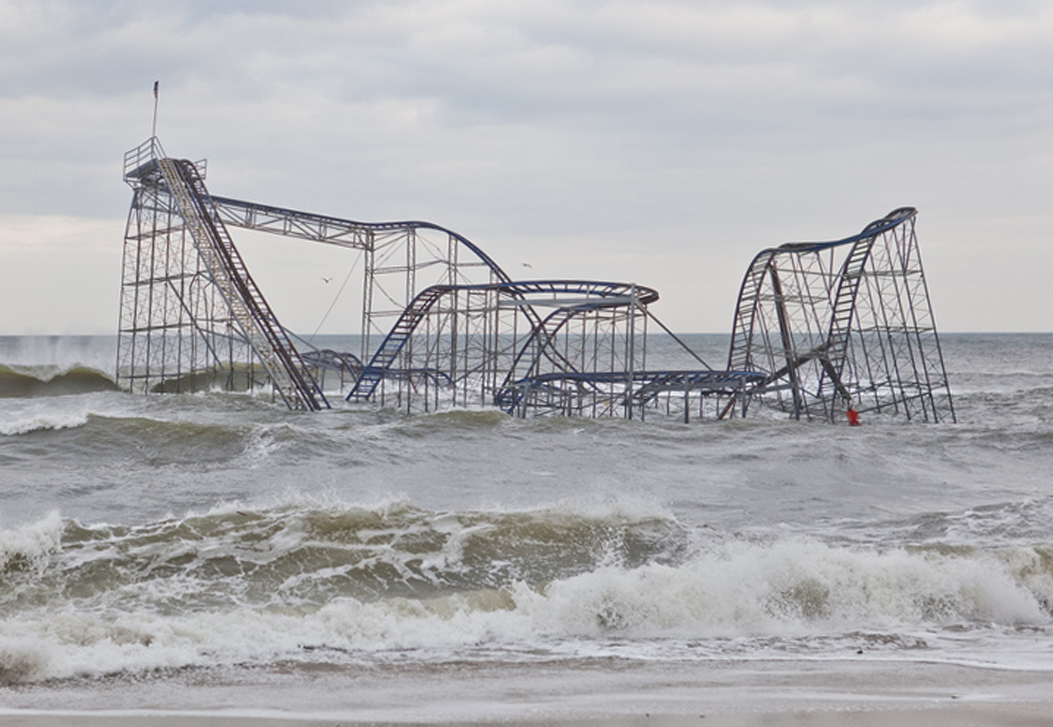
Superstorm Sandy damage in Seaside Heights New Jersey (Image: Anthony Quintano)

Over the last year or so, Daniel Nyberg and I have been writing a paper exploring the role of political myths in underpinning corporate responses to climate change. The paper has now been published online in the journal Environmental Politics, and you can download a PDF of the article here. I’ve also presented the paper in a Sydney Environment Institute seminar (audio file below).

Continue reading Making Our Planetary Suicide a ‘Rational’ Project

What Does Direct Action on Climate Change Really Look Like?

As the disconnect between political obfuscation and climate science continues, how might individuals respond to climate change?

One theme that has emerged in my research is how people are beginning to reconsider their jobs and careers based upon a personal realisation of the urgency of the climate crisis. For instance, last week I received an email from a scientist in a US environmental agency, who related the increasingly tough choices she was having to make in her job. She was involved in overseeing fossil fuel developments in coal and gas, something she found increasingly problematic. After much thought she decided to no longer work for organisations facilitating the extraction and use of fossil fuels. As she explained:

…many have pointed out that my position allowed me to protect the environment. But that never sat well with me, especially as it relates to fossil fuels with their broad and wide externalities. After much introspection, and a couple of tears, I realized that an opinion like that is a flat view and it ignores the fact I have enabled interests that are contrary to human existence. It’s the enabling that drives us nuts. To this end, I now flatly refuse any work that deals with fossil fuels interests. It makes life much simpler for me and I suspect it will for others.

Continue reading What Does Direct Action on Climate Change Really Look Like?

Climate change: In the end we’re all losers

iStock_000015530665Small

Who will be the business ‘winners and losers’ from the repeal of the ‘carbon tax’ under Australia’s new conservative Federal Government? This was a question I was asked in a recent interview for ABC TV’s The Business. You can see the resulting report here.

The ‘winners’ in this story should come as no surprise – mining and energy companies -especially those involved in fossil fuel extraction and consumption, which would no longer be required to pay for their greenhouse gas emissions. By contrast, the ‘losers’ were seen as those groups promoting renewable energy and seeking to wean us off our fossil fuel addiction. However, what struck me in participating in this interview are the incredibly short-term time horizons business people frame their decision-making within. ‘Winners’ are defined in terms of the immediate financial savings that result from changed legislation, rather than the strategic implications of continued high carbon emissions in a changing world.

Continue reading Climate change: In the end we’re all losers