Category Archives: Climate change

Forget ‘Business As Usual’

Reposted from the Erasmus Research Institute of Management

As the evidence of climate change mounts, Professor Gail Whiteman says managers must reimagine business. (Text Bennett Voyles)

For some time now, most businesses have put environmental sustainability on an ever-growing list of laudable corporate social responsibility goals. Some have even made serious efforts to achieve that aim.

Continue reading Forget ‘Business As Usual’

We are The Borg – So is Resistance to Climate Catastrophe Futile?

Recently I came across this excellent short video of our likely climate future based on recent IPCC reviews. Produced by Globaia, this visualisation is quite effective in trying to comprehend the impact humanity is having upon the Earth’s climate and ecosystem at a global scale; popularised in the concept of the ‘Anthropocene‘.

In reviewing the current social debate around climate change, I’m often reminded of the similarities between our current climate crisis and popular culture references in books and film. There is a rich vein of dystopian literature and related movies that tap into this zeitgeist of environmental disaster, overpopulation and apocalypse (for a reflection on this see Kathryn Yusoff and Jennifer Gabrys’ article ‘Climate Change and the Imagination’).

Continue reading We are The Borg – So is Resistance to Climate Catastrophe Futile?

Book Launch: Climate-Challenged Society & Globalization and the Environment

ScreenHunter_51 Nov. 22 19.19

Australia has long been known for its environmental politics – movements, policy, and academic analysis. On Wednesday 11th December, four of the most well-known Australia-based academics of environmental politics from the University of Sydney, University of Melbourne, and Australian National University will convene to discuss and celebrate two recent books aimed at analysing and stimulating debate on the current and future state of environmental and climate politics.

Continue reading Book Launch: Climate-Challenged Society & Globalization and the Environment

Researching Climate Change in an Era of Political Denial

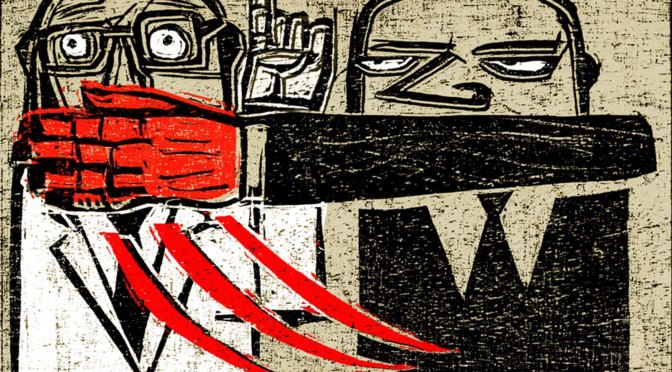
99129170_7d542023a6_o

That the social debate around climate change is a ‘culture war’ should come as no surprise to anyone observing current political debate in Australia, the US, UK and Canada. In contrast to much of the rest of the world where climate science is rarely debated, in the Anglo-Saxon world the culture war around climate change rages on with increasing vehemence.

Continue reading Researching Climate Change in an Era of Political Denial

Making Our Planetary Suicide a ‘Rational’ Project

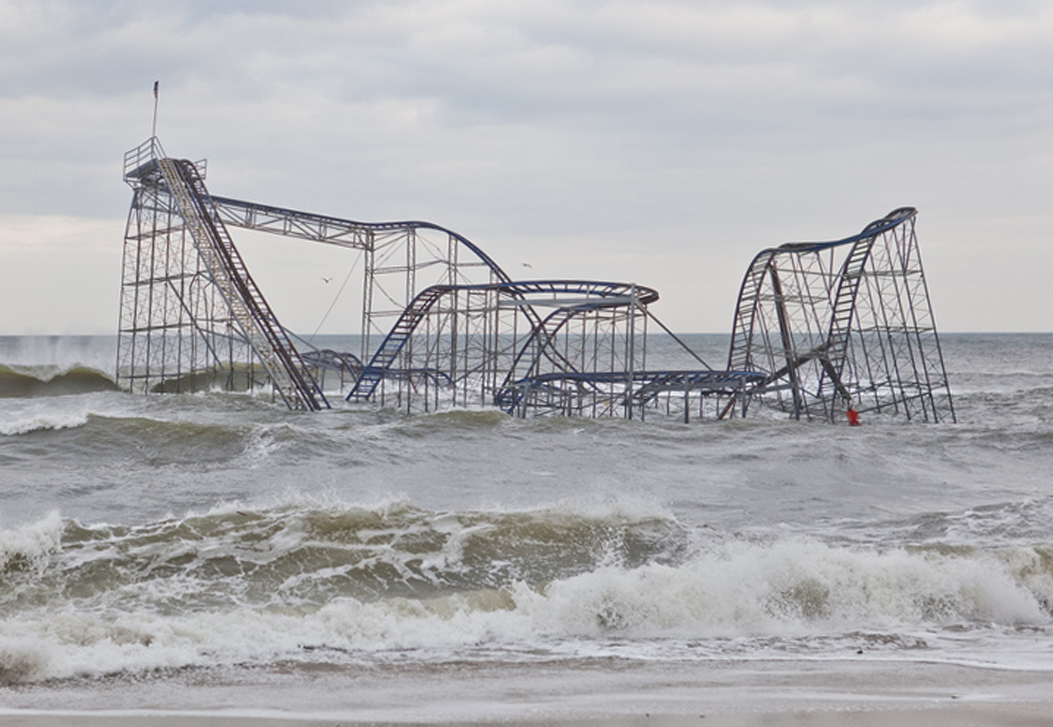
Superstorm Sandy damage in Seaside Heights New Jersey (Image: Anthony Quintano)

Over the last year or so, Daniel Nyberg and I have been writing a paper exploring the role of political myths in underpinning corporate responses to climate change. The paper has now been published online in the journal Environmental Politics, and you can download a PDF of the article here. I’ve also presented the paper in a Sydney Environment Institute seminar (audio file below).

Continue reading Making Our Planetary Suicide a ‘Rational’ Project

What Does Direct Action on Climate Change Really Look Like?

As the disconnect between political obfuscation and climate science continues, how might individuals respond to climate change?

One theme that has emerged in my research is how people are beginning to reconsider their jobs and careers based upon a personal realisation of the urgency of the climate crisis. For instance, last week I received an email from a scientist in a US environmental agency, who related the increasingly tough choices she was having to make in her job. She was involved in overseeing fossil fuel developments in coal and gas, something she found increasingly problematic. After much thought she decided to no longer work for organisations facilitating the extraction and use of fossil fuels. As she explained:

…many have pointed out that my position allowed me to protect the environment. But that never sat well with me, especially as it relates to fossil fuels with their broad and wide externalities. After much introspection, and a couple of tears, I realized that an opinion like that is a flat view and it ignores the fact I have enabled interests that are contrary to human existence. It’s the enabling that drives us nuts. To this end, I now flatly refuse any work that deals with fossil fuels interests. It makes life much simpler for me and I suspect it will for others.

Continue reading What Does Direct Action on Climate Change Really Look Like?

Climate change: In the end we’re all losers

iStock_000015530665Small

Who will be the business ‘winners and losers’ from the repeal of the ‘carbon tax’ under Australia’s new conservative Federal Government? This was a question I was asked in a recent interview for ABC TV’s The Business. You can see the resulting report here.

The ‘winners’ in this story should come as no surprise – mining and energy companies -especially those involved in fossil fuel extraction and consumption, which would no longer be required to pay for their greenhouse gas emissions. By contrast, the ‘losers’ were seen as those groups promoting renewable energy and seeking to wean us off our fossil fuel addiction. However, what struck me in participating in this interview are the incredibly short-term time horizons business people frame their decision-making within. ‘Winners’ are defined in terms of the immediate financial savings that result from changed legislation, rather than the strategic implications of continued high carbon emissions in a changing world.

Continue reading Climate change: In the end we’re all losers

IPCC 2013 and Creative Self Destruction Redux

Image: Christopher Wright

Well the IPCC‘s latest scientific report has come out confirming what many of us have suspected – that anthropogenic climate change is on track with previous worst-case scenarios and the future prognosis is bleak. Given the IPCC is by its nature a conservative organisation, it seems likely that as before, the current report may well underestimate some climate impacts. Be that as it may, this is startling and confronting  to read given the import of its conclusions.

Continue reading IPCC 2013 and Creative Self Destruction Redux

The market versus the environment has to be a fairer fight

economy1

A commitment to sustainability has become an essential component of any modern-day corporation’s public face. Visit the homepages of major organisations in any sector, from building to banking, from cola-making to coal-mining, and you’ll find their ‘green’ credentials front and centre.

This might be viewed as a predictable and entirely well-intentioned response to mounting concerns over climate change, deforestation, declining biodiversity and other environmental issues. Yet it is vital to note that an innate component of that response has been to further incorporate the environment within market capitalism.

Continue reading The market versus the environment has to be a fairer fight

Launch of the Sydney Environment Institute

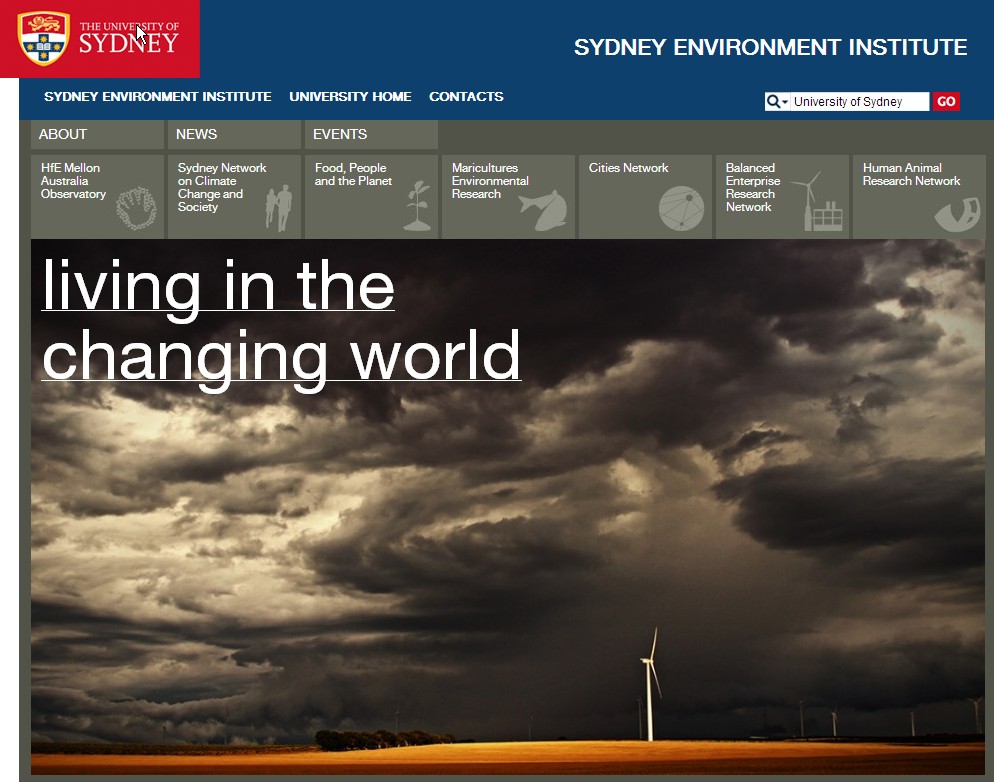
ScreenHunter_50 Sep. 21 22.09

Last Tuesday evening I attended the launch of the new Sydney Environment Institute (SEI) at the University of Sydney. SEI is a cross-Faculty research institute which aims to address two of the key questions of our time:

  • how do we understand and redesign the fundamental relationship between human communities and the natural world that supports them; and
  • how can people and societies adapt positively to environmental change?

Continue reading Launch of the Sydney Environment Institute

Imagining Our Climate Changed Future

3972775207_7da7d4af1d_o

Climate change has rapidly emerged as a major threat to our future. Indeed the increasingly dire projections of increasing global temperatures and escalating extreme weather events highlight the existential challenge that climate change presents for humanity.

In popular and political discourse, climate change is depicted as an environmental or ‘natural’ problem that requires ‘rational’ responses based on scientific evidence. However, there is also a need to view climate change as a social and politically embedded phenomenon, linked to patterns of production and consumption and the ideological assumptions that underpin the economic system and our collective sensemaking processes.

Continue reading Imagining Our Climate Changed Future

New research network focuses on sustainability and business

In the decade ahead, Australia and the world will face environmental, social and financial challenges of an unprecedented scale. These include tensions between economic growth and environmental degradation, a need to dramatically reduce greenhouse gas emissions in response to climate change, and pressure to improve social inclusion and equity in a world of significant poverty and inequity. Businesses are clearly key players when it comes to responding to these challenges, but can businesses look beyond their short-term bottom line and better balance their economic needs with social and environmental priorities?

In focusing on these issues, recently the University of Sydney Business School launched its Balanced Enterprise Research Network (BERN) which explores how business in particular, can better balance economic, environmental and social concerns and improve the well-being of a wide range of stakeholders, including employees, communities and society more generally.

Continue reading New research network focuses on sustainability and business

What Climate Change Looks Like

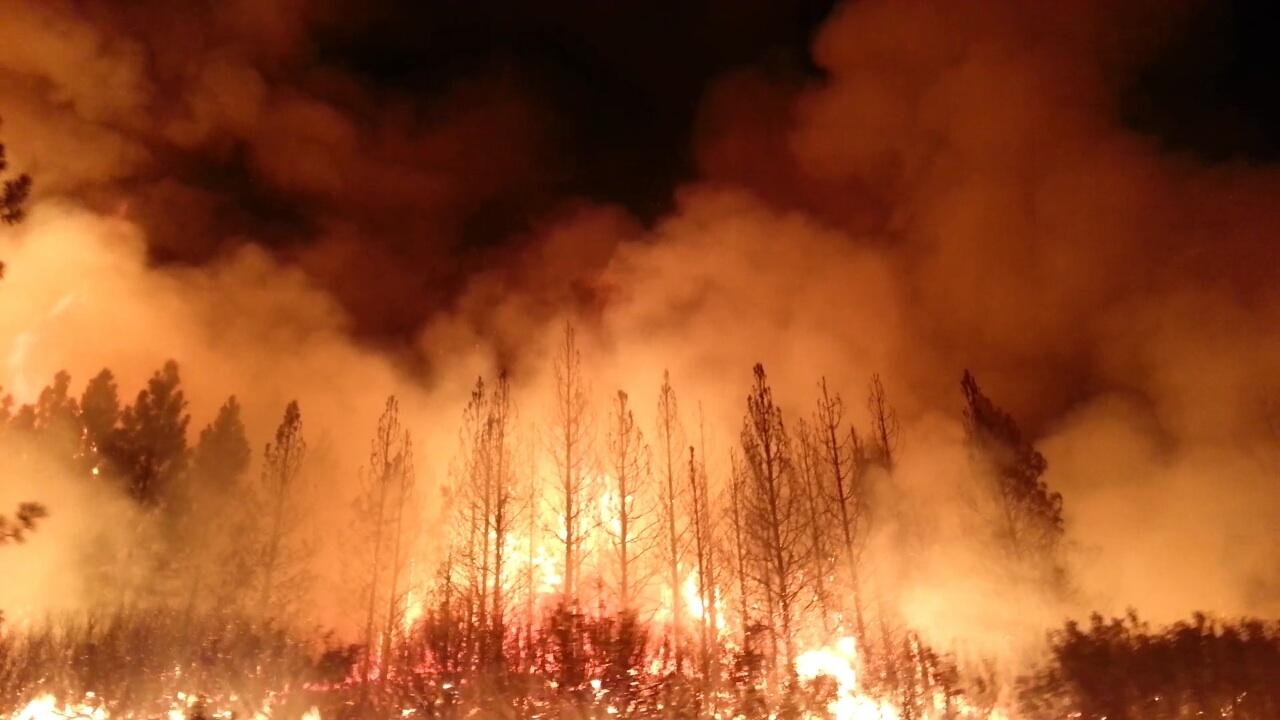
One of the faces of a warming planet - The Rim Fire, California, August, 2013 (Image: U.S. Forest Service)
One of the faces of a warming planet – The Rim Fire, California, August, 2013 (Image: U.S. Forest Service)

The last few weeks has been full of news of extreme weather events from across the world. One of the best sources for keeping up to speed on the Anthropocene’s new climate ‘normals’ is Faun Kime’s great blog site, which includes weekly pictorial updates on weather disasters unfolding around the world.

Last week the extreme weather news hit our family in a way that really resonated. No, not one of our increasingly regular Australian extreme weather events, but something happening on the other side of the world, in a place we had visited a few months ago and fallen in love with: Yosemite National Park in California, USA.

Continue reading What Climate Change Looks Like

Can our Political Systems Deal with Climate Change?

Protestors outside the Copenhagen climate talks, December 2009 (Image: Bastien Vaucher http://bit.ly/1cVuhck)

So here’s the thing. Despite decades of debate and a scientific consensus that anthropogenic climate change is a real and present danger to not only our societies, but our future as a species – greenhouse gas emissions continue their inexorable rise. This year we passed the symbolic 400 ppm CO2 concentration levels (not seen on Earth for several million years) and we now appear destined to exceed the politically constructed fiction of a 2 degree limit on global warming. The house is on fire, the experts are screaming ‘do something!’, and yet we remain oblivious, addicted to the distractions of hyper-consumption and tech-toys. Which brings me to the topic of this post: can our political systems actually deal with the challenge of climate change?

Continue reading Can our Political Systems Deal with Climate Change?

The Missing Factor in Climate Change Adaptation? Human Psychology

How well do humans respond in a crisis and how we will react in the ‘new normal’ of on-going climate crisis? This is a question I’ve been pondering more and more in thinking about the human and organizational dimensions of climate change.

For instance, within the mainstream discourse of climate change policy the argument is often made that we need to move beyond climate change ‘mitigation’ and focus increasingly on ‘adaptation’. While adaptation is a critical part of responding to the impacts of climate change, the implication is that adaptation is now the ‘main game’ and will involve relatively manageable infrastructure and planning changes. The problem here is that the scale of climate change on ‘business as usual’ (BAU) projections will likely exceed manageable parameters. Physically, there are clear issues over how humanity can adapt to 4-6 degrees Celsius warming in terms of a habitable climate, extreme weather events and the demise of food supplies. Indeed, some researchers have now started to focus on ‘transformative’ adaptation. As a recent commentator noted, ‘The words that need to be in our conversations are transformation, rationing and shared sacrifice’. However, this becomes even more complex once we consider humanity’s psychological ‘adaptive capacity’ in a situation of societal breakdown.

Continue reading The Missing Factor in Climate Change Adaptation? Human Psychology