
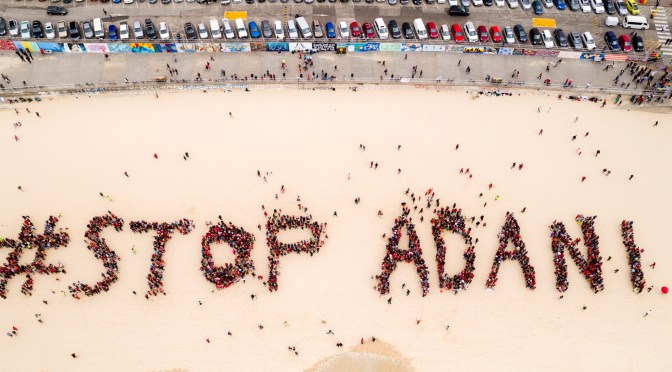
With the worsening impacts of climate change becoming ever more evident, environmental protest has used more spectacular interventions to garner public awareness and support. Here, media-savvy activists have used spectacle to generate public attention to their cause. This has included protest performances against corporate sponsorship of cultural institutions, the disruption of major sporting events, and the ‘culture jamming’ of corporate advertising and public relations. These new forms of protest seek to capture public attention and engagement through viral social media imagery and other communications that, echoing the strategy of Greenpeace’s founder Bob Hudson, act as ‘mind bombs’ in expanding the public’s understanding of the urgency of climate change.

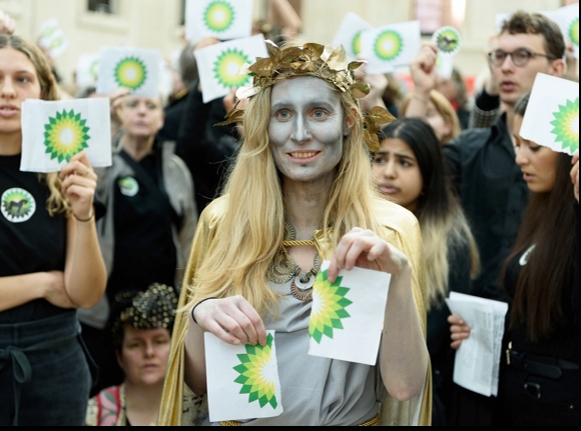
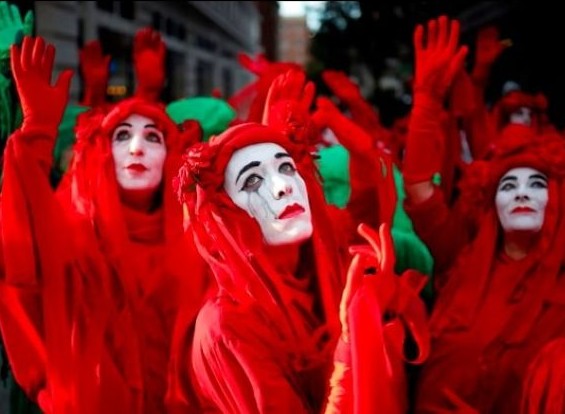
Recent examples of climate protest spectacle
However, the dominance of corporate marketing and advertising promoting ever greater consumption challenges such environmental appeals. As French theorist Guy Debord ([1967] 2014) presciently warned in The Society of the Spectacle, we live in a globalised capitalist economy in which image and artifice dominate experience and fundamentally shape the construction of meaning and identity. Even when radical or revolutionary ideas challenge consumer capitalism, these are often stripped of their radical intent and are repurposed as incentives for further consumption; whether it be the conversion of revolutionary icons like Che Guevara into fashion accessories, or the use of Black Lives Matter, LGBTQ+ or Me Too movements within the “woke-washing” of corporate advertising campaigns. In this way, social movements which offer more radical and democratic alternatives are subsumed within corporate capitalism. This raises the question of the degree to which spectacular protest might avoid such incorporation and become a vehicle for more meaningful counter-hegemonic challenge?
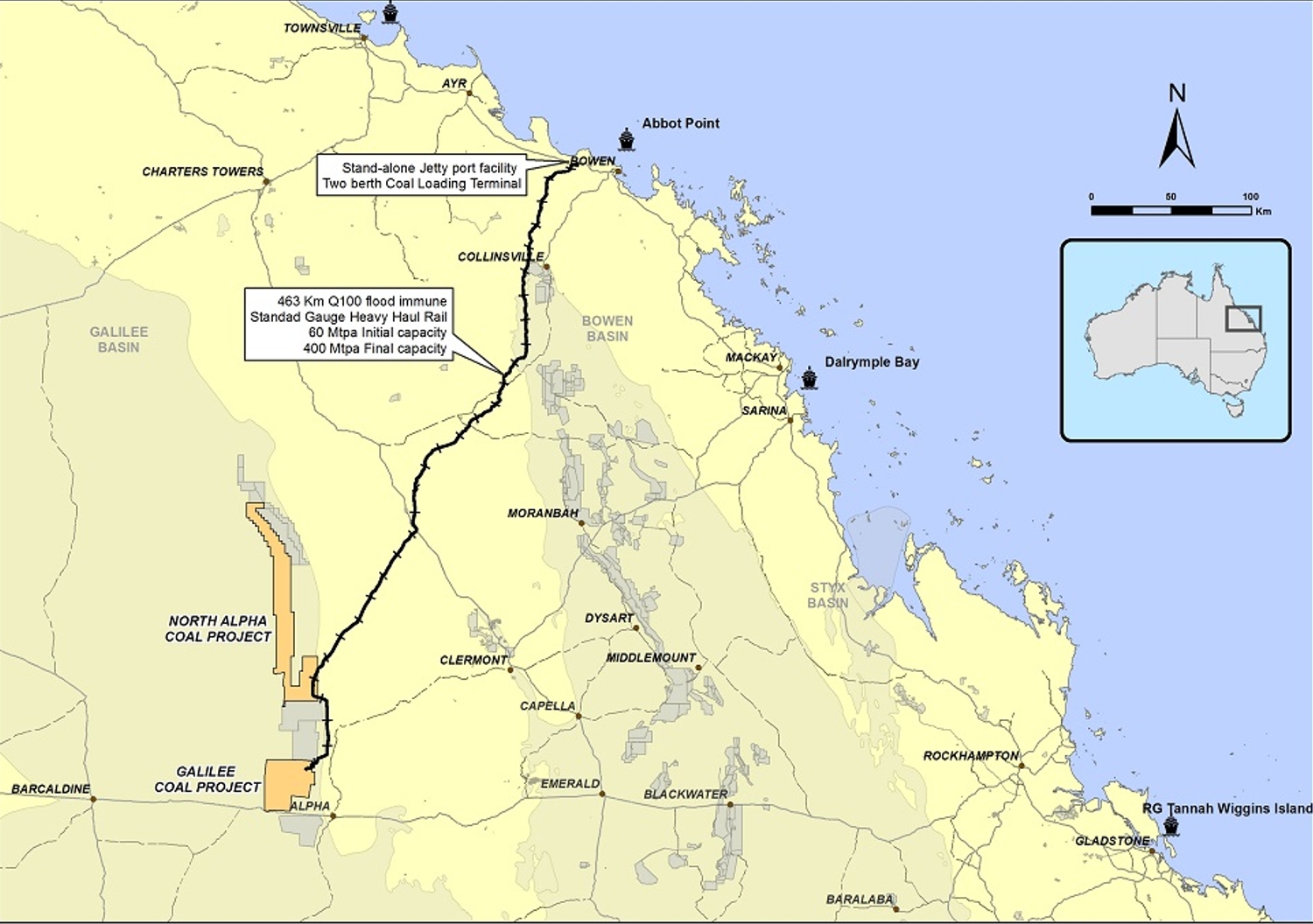
In a recently published paper in the journal Research in the Sociology of Organizations, my colleagues Daniel Nyberg, Vanessa Bowden and I explore the ways in which this more spectacular form of environmental protest seeks to challenge the hegemony of the fossil fuel industry and its continued expansion in the face of a rapidly worsening climate crisis. We do this by analysing the Stop Adani campaign in Australia, which sought to prevent the construction of the Adani Carmichael coal mine; the first of several ‘mega-mines’ in the previously untapped Galilee coal basin in the state of Queensland.
The Stop Adani Protest Campaign
As one of the world’s largest known coal reserves, opening the Galilee basin to coal mining represented a major new carbon frontier that would dramatically increase global carbon emissions. The mine quickly became a focus of protest within a context of growing climate activism in Australia during the 2010s. In the face of federal and state government support for the project, including mine approvals, the extinguishment of Indigenous native title, the granting of water rights, and a proposal for a billion dollar government loan, the Stop Adani campaign became a dominant issue in Australian politics and a leading example of a distributed, grass-roots network of climate activism, undertaking over 1,300 civil resistance actions and promoting 3,000 different protest events from 2017-2021 (Gulliver et al., 2021). Our analysis of this environmental protest consisted of interviews with key activists and environmental campaigners as well as an extensive review of media coverage and the voluminous social media that was used to promote and document this social movement.
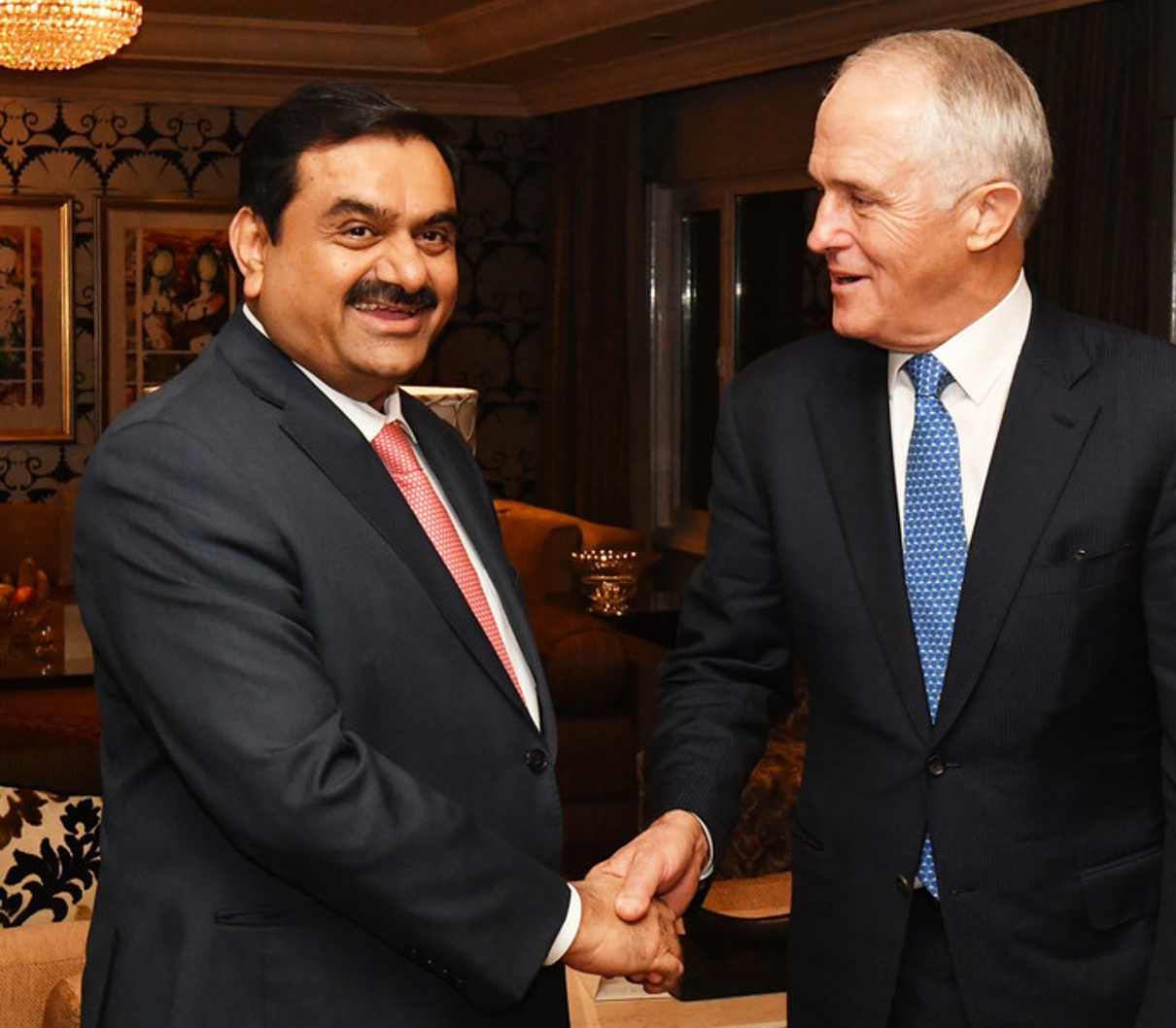
Australian Prime Minister Malcolm Turnbull meeting Gautam Adani, Chairman of the Indian conglomerate Adani Group in Delhi in April 2017.
Protest Spectacle: Performing Agonism
A key theme that emerged from our analysis was the way in which the Stop Adani campaigners emphasised visual spectacle and expressive acts of protest. These ‘protest spectacles’ included: targeted protests and blockades of corporate offices and functions; the gate-crashing and photo-bombing of business and political meetings and media events; the engagement of celebrity voices on social media and in public performance; the use of documentary films and road shows; mass rallies and protest convoys; and the conscious branding and creation of material symbols that defined the protest movement.
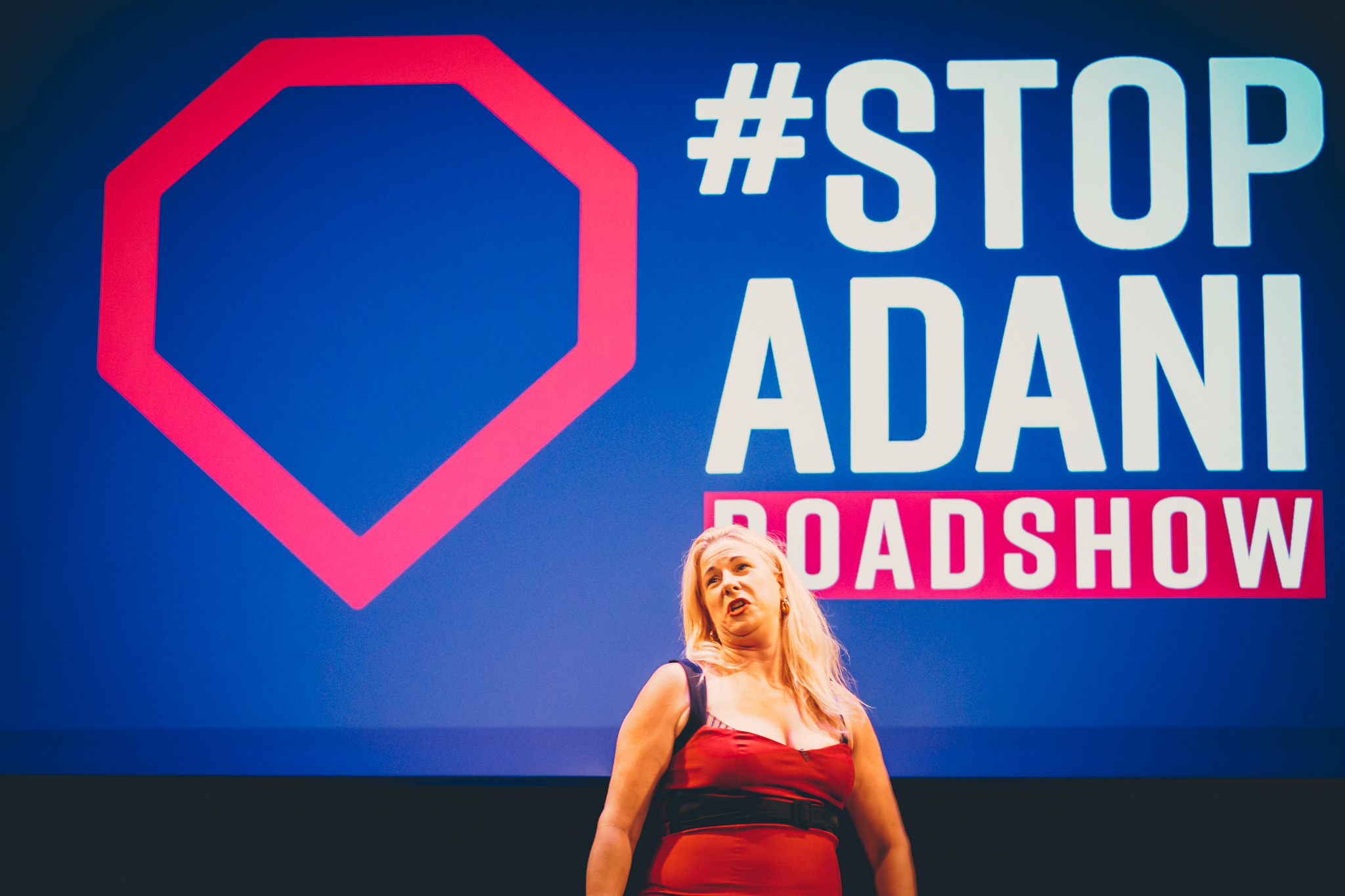
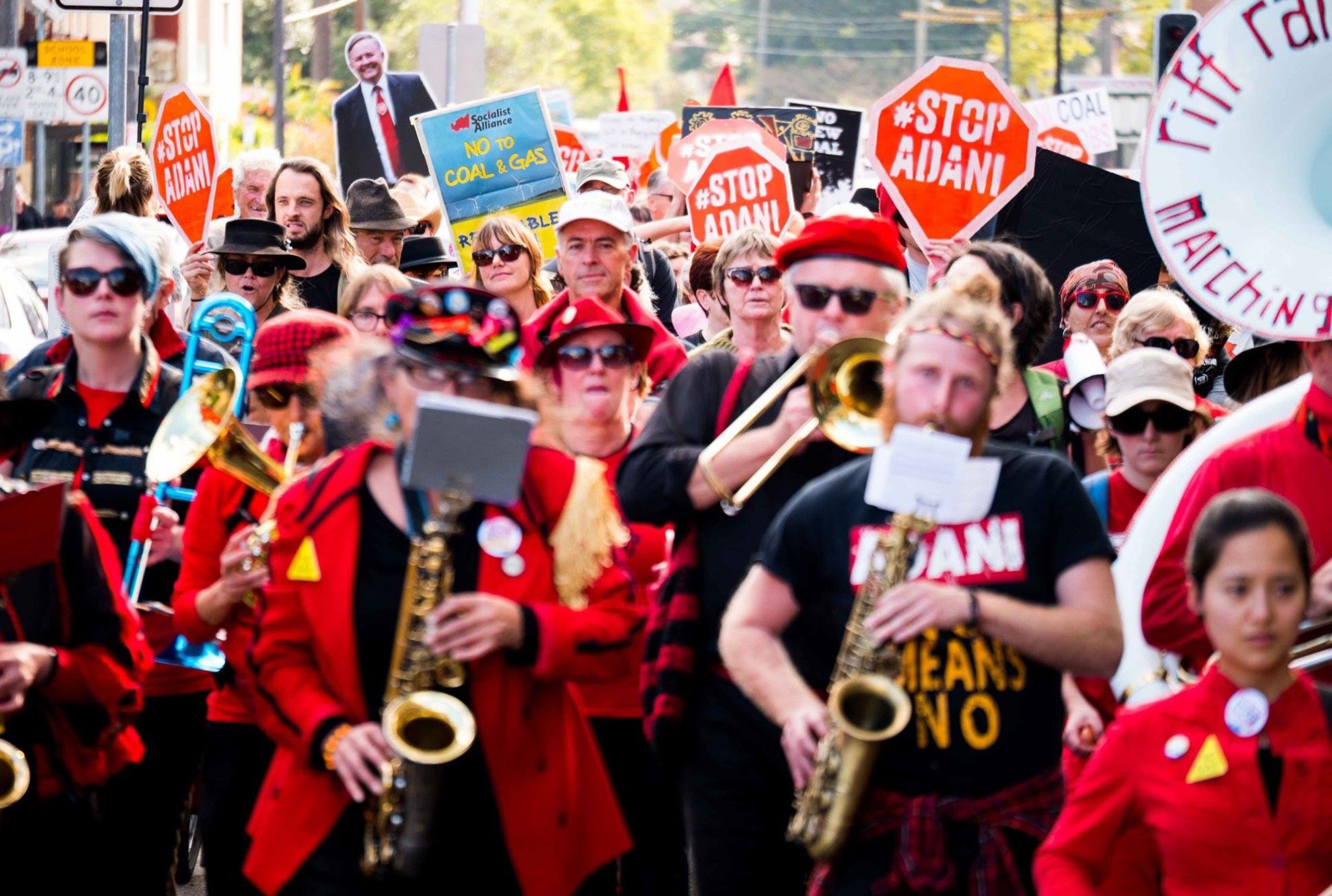
For instance, in targeting the major banks funding the coal mine’s development, flash-mobs of protestors would mass around the entrance of suburban bank branches and corporate headquarters clad in coloured T-shirts and ceremonially cut up credit cards in front of assembled media cameras. Protestors gate-crashed corporate and political gatherings chanting Stop Adani slogans, sporting the distinctive red ‘Stop Adani’ traffic sign logo or dressed as ‘climate angels’ or ‘Nemo’ clown fish (the proposed mine’s impact on the endangered Great Barrier Reef became a recurring theme of the protest). In one particularly striking protest action, Cairns Stop Adani activists protested outside the federal member’s electoral office dressed as ‘climate zombies’ resulting in arrests and generating significant media interest. As one of the campaign’s leaders outlined:
We’re now in a country without any independent media, somewhat uniquely in the world. So, spectacle is one of the only tactics you’ve got to get around it. You take your own images and then you use social media to tell that story.
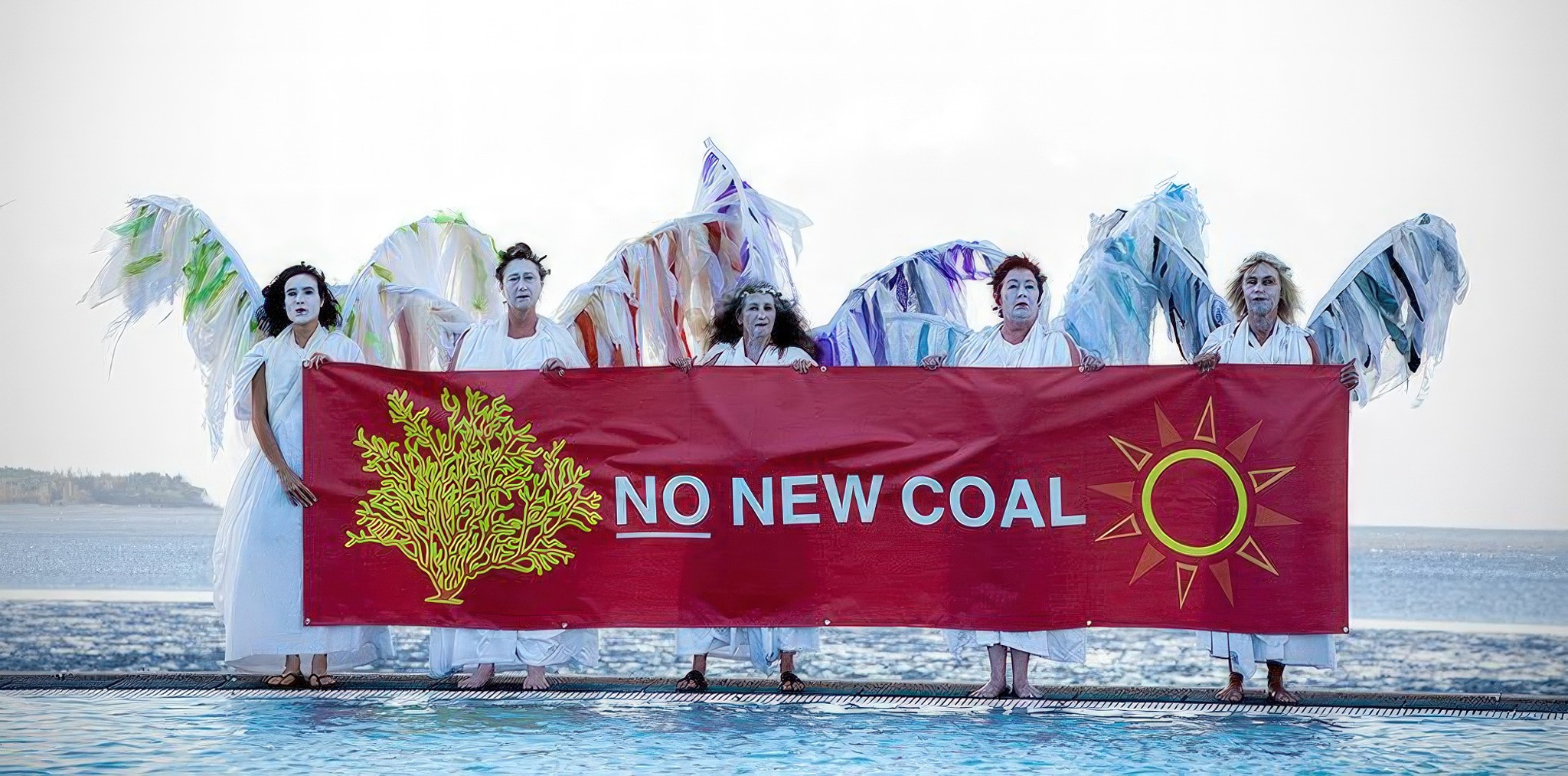
Climate Angels protesting against the Adani coal mine on the Cairns waterfront, 29 June 2018
Building the spectacle of protest and maximizing its public visibility also involved a range of celebrity voices, including popular musicians, film stars, best-selling writers, and famous environmentalists and television personalities. Examples included rock band Midnight Oil which performed sell-out concerts promoting the Stop Adani message; pop-star Montaigne appeared on the red carpet at a music awards with the words ‘Stop Adani’ emblazoned across her face; award-winning authors Tim Winton and Richard Flanagan who penned articles and spoke at Stop Adani rallies; as well as famous television personalities such as Sir David Attenborough whose documentary on the Great Barrier Reef explicitly focused on the threat of climate change and coal mining (Wright & Nyberg, 2022). These famous faces and their endorsements proved critical in broadening the reach of the protest campaign and engaging different communities to the cause. As the leader of one of the protest organizations argued:
… it was vital to have celebrities join the Stop Adani campaign as many have huge followings allowing us to reach many millions of people we wouldn’t reach otherwise, particularly those outside of Australia
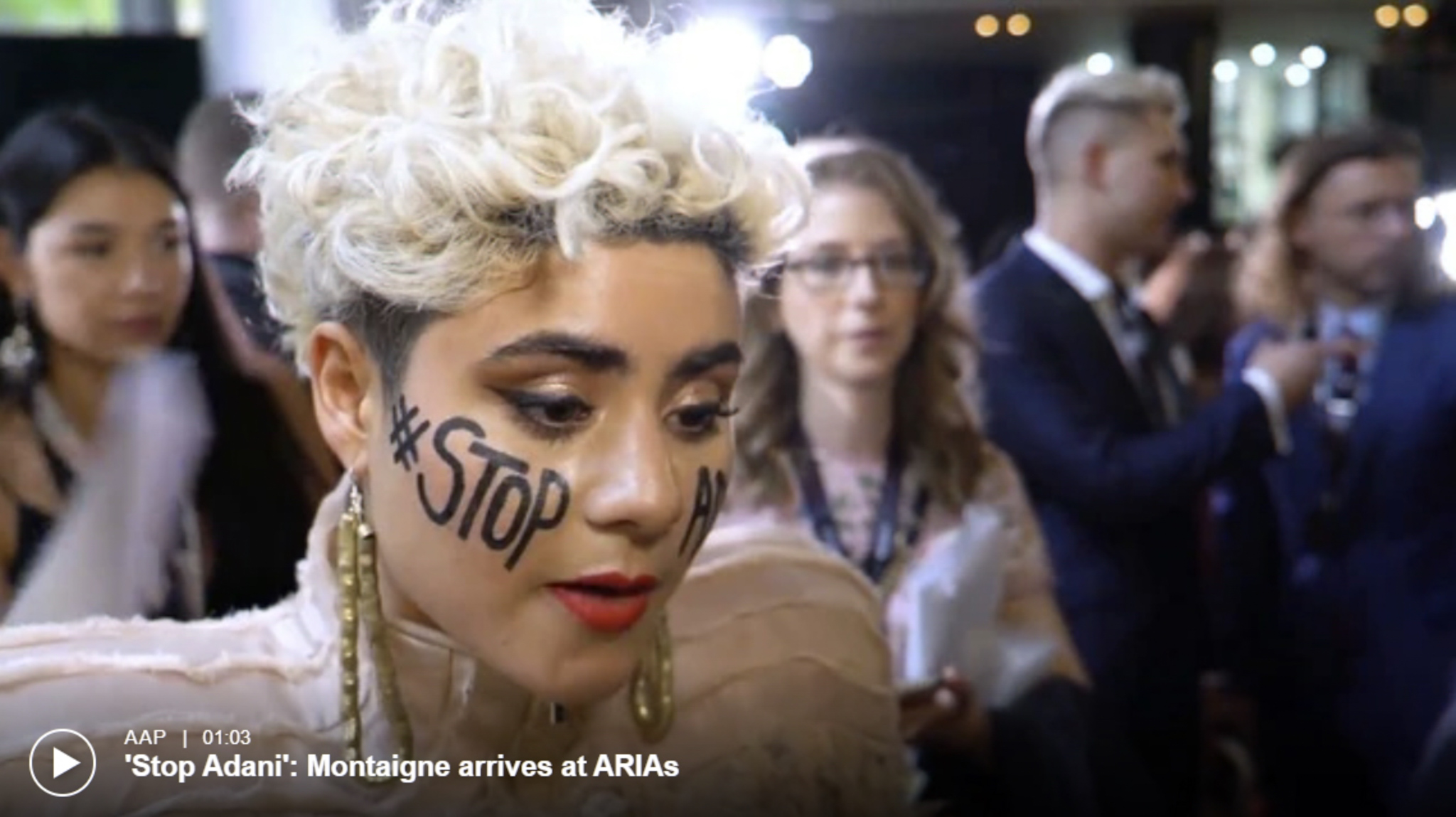
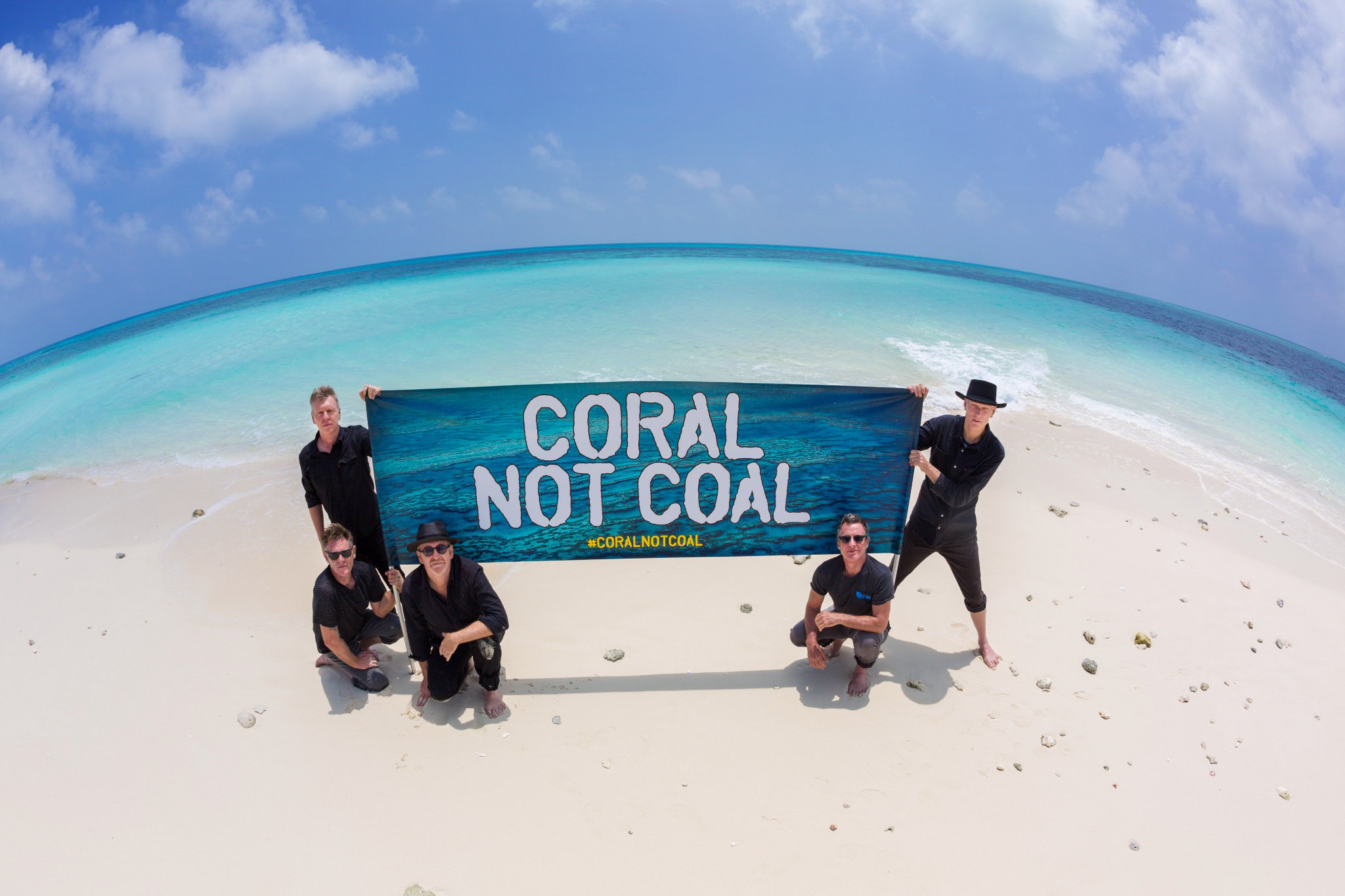
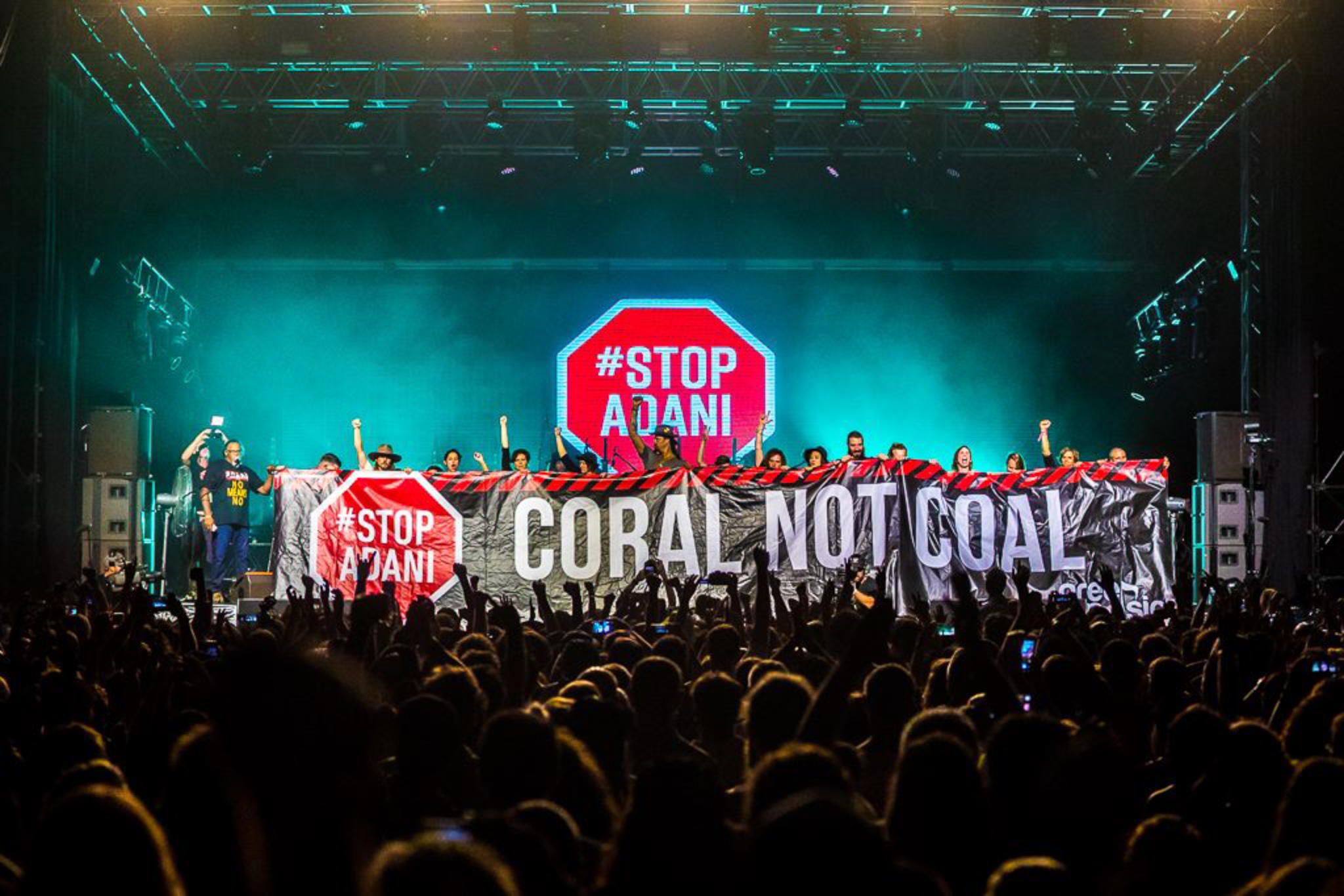
Famous musicians such as Montaine, Midnight Oil and others were key actors in the Stop Adani movement.
The Tightrope of Activism
The Stop Adani campaign provides an illustrative example of the growing role of spectacle in environmental protest. As a counter-hegemonic strategy this involved what we have termed a ‘tightrope of activism’ involving three key elements.
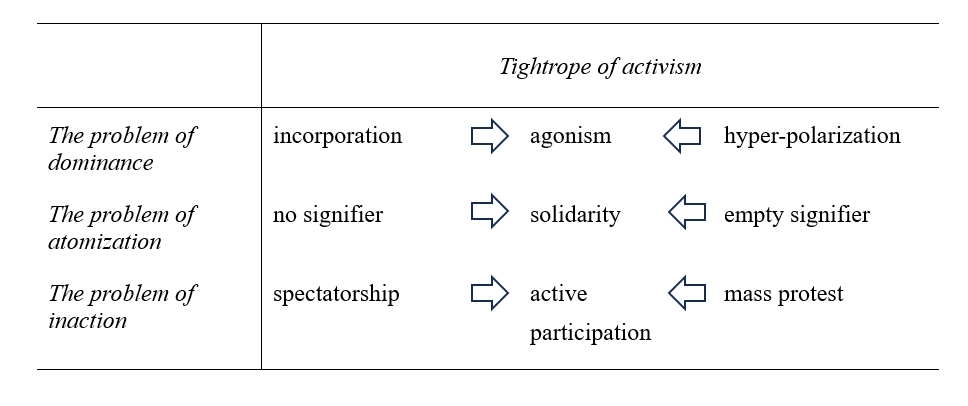
First, environmental protest faces the problem of dominance in which there is both the danger of incorporation of climate and environmental issues within the ‘green business’ agenda and on the other hand a form of ‘hyper-polarisation in which protestors are framed as ‘extreme’ or ‘dangerous’ resulting in their further relegation and repression. The balance here is about maintaining a political frontier which avoids both incorporation and marginalisation; a difficult task given the way in which the perception of protest actions is often at the mercy of corporations, governments, and media which control the main sources of public communication.
Second, environmental protest faces the problem of atomisation in seeking to overcome the individualisation of politics under neoliberalism. Here, the critique within the protest spectacle needs to be sufficiently broad to mobilize different communities and build an equivalence between different political demands – in this case, the signifier ‘Stop Adani’, a simple message around which the diverse groups and actors can build equivalence. However, it cannot be so broad that it lacks focus and becomes an empty signifier that can be absorbed within a capitalist rationale (e.g., the discourse of “sustainability”). The tightrope of protest spectacle thus tries to walk the line between, on the one hand, holding together the different requests or interests and, on the other, a broad mobilization that becomes meaningless or easily employed by adversaries.
Third, the protest spectacle faces the problem of inaction and needs to generate participation. The tension here is between the inaction of spectatorship, where the protest becomes entertainment without arousing mobilization, and on the other hand, mass protests that leave no room for the formation of individual participation. At one end of the tightrope, the protest spectacle becomes reproduced by the mass media for consumption, at the other end, mass protest gets attention but fails to link the event to political demands which challenge the dominant institutions. In walking this tightrope, there is the possibility to build the movement; to invite active participation; to illustrate the value of what might be lost and to urge those who might otherwise support the project to choose a different path.
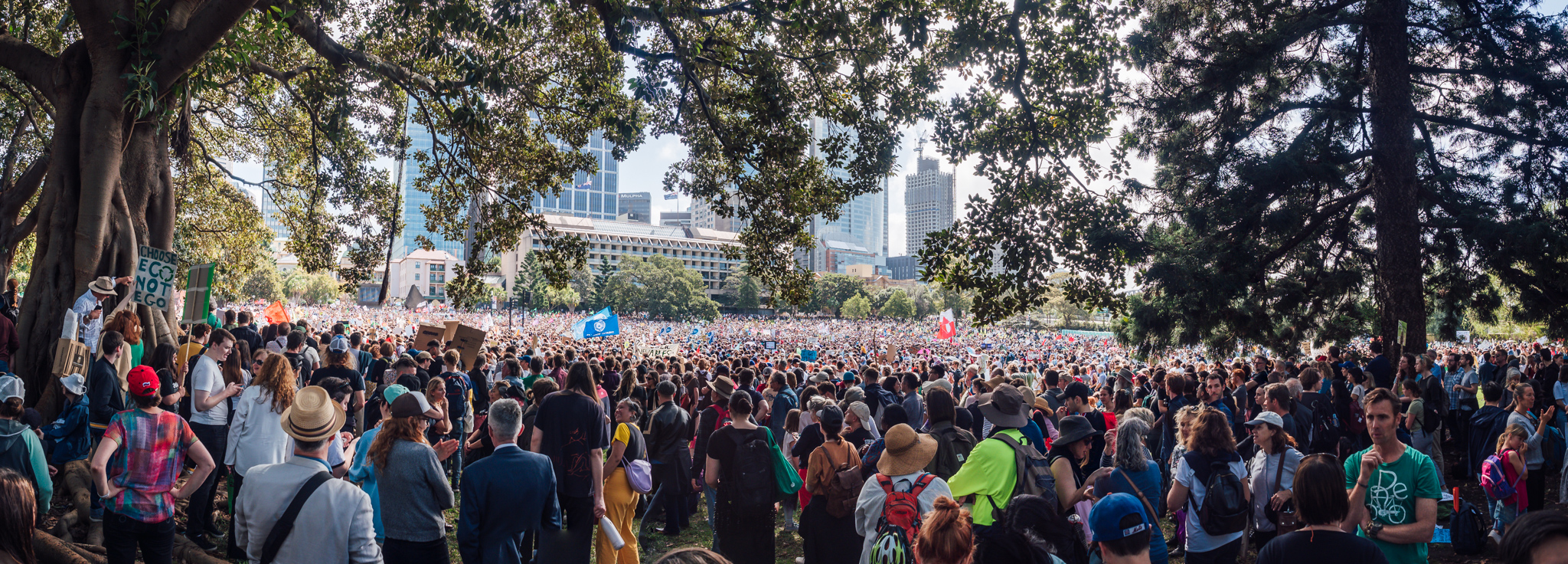
An estimated 90,000 people protest in Sydney for climate action, 20 September 2019.
Coda
While ultimately unable to prevent the Adani mine from being constructed, the Stop Adani campaign did succeed in delaying and dramatically reducing the size of the mine with its current operations about 20% of its original intended capacity. The protests also succeeded in forcing major banks and investors – as well as a broad swathe of corporate partners – to abandon support for the project, and largely destroyed the social license of Adani, forcing the company to hastily rename its operations Bravus Australia. Perhaps most importantly, the high public profile of the Stop Adani campaign forestalled the broader development of coal mining in the Galilee Basin, thwarting one of the world’s largest new carbon frontiers. Underpinning these successes was the way those opposing the mine had created a nation-wide grassroots protest movement that cut through the media and political silence on coal mine expansion and etched the Adani name within Australian public consciousness. Here the role of protest as spectacle was key.

